1 Fusionopolis Way,
Connexis South, #17-01,
Singapore 138632
© National Supercomputing Centre (NSCC) Singapore. Updated as of 14 May 2024.
NSCC Singapore strives for products and services with the highest levels of security and reliability.
2026 Singapore HPC Users Symposium — HPC Connects: Powering AI and Emerging Technologies for Scientific Discovery
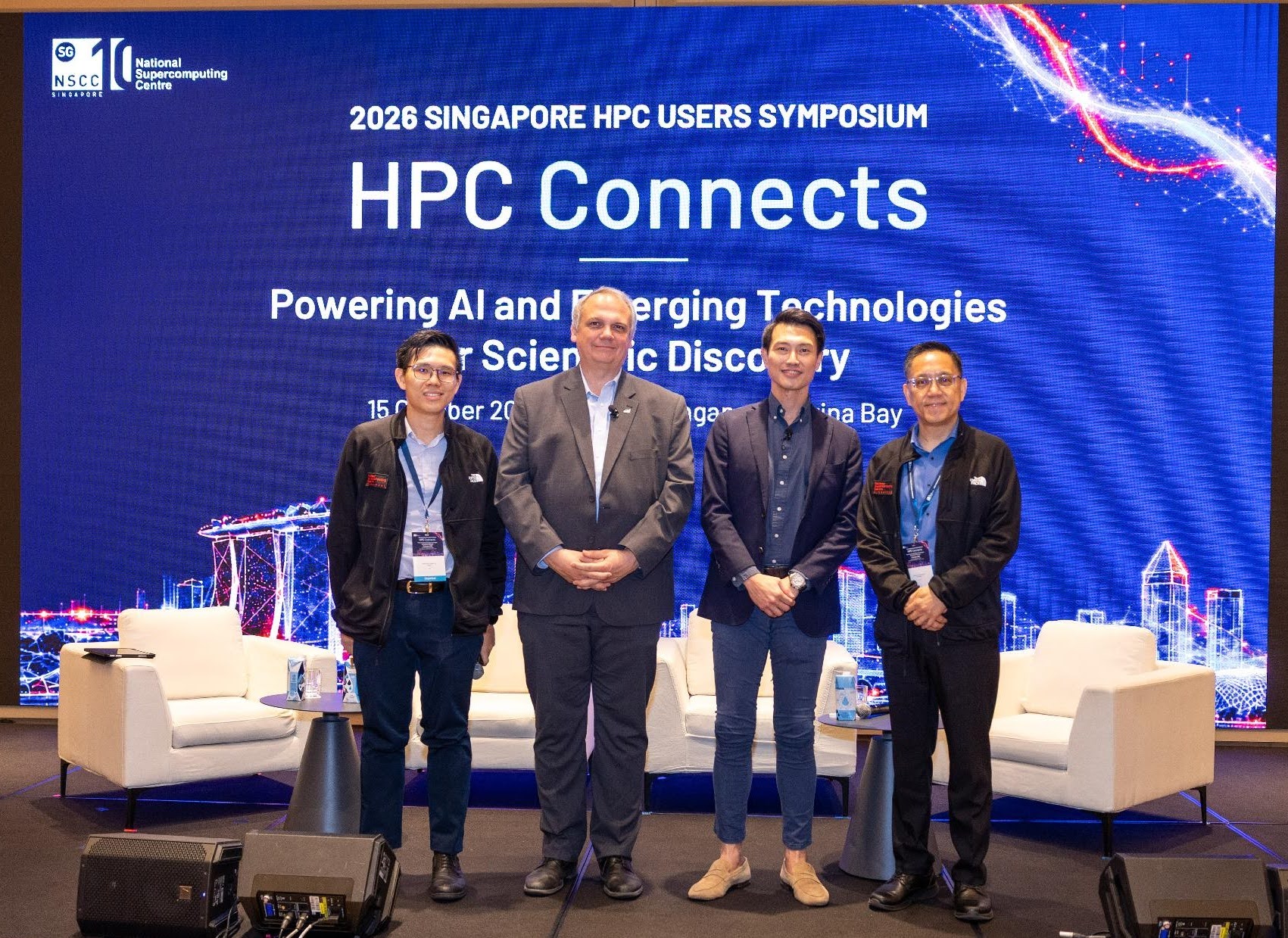
The 2026 Singapore HPC Users Symposium brought together researchers, scientists, industry leaders, technology practitioners and policymakers on 15 October 2026, for a day of knowledge exchange, collaboration and discussion on the future of high performance computing (HPC), artificial intelligence (AI) and emerging technologies that are transforming scientific research and discovery.
Organised by the National Supercomputing Centre (NSCC) Singapore under the theme “HPC Connects: Powering AI and Emerging Technologies for Scientific Discovery”, the symposium featured keynote presentations, research and technology tracks, poster showcases and networking opportunities, highlighting the latest research advancements and applications of advanced computing across scientific disciplines.
Charting the Future of HPC, AI and Scientific Discovery
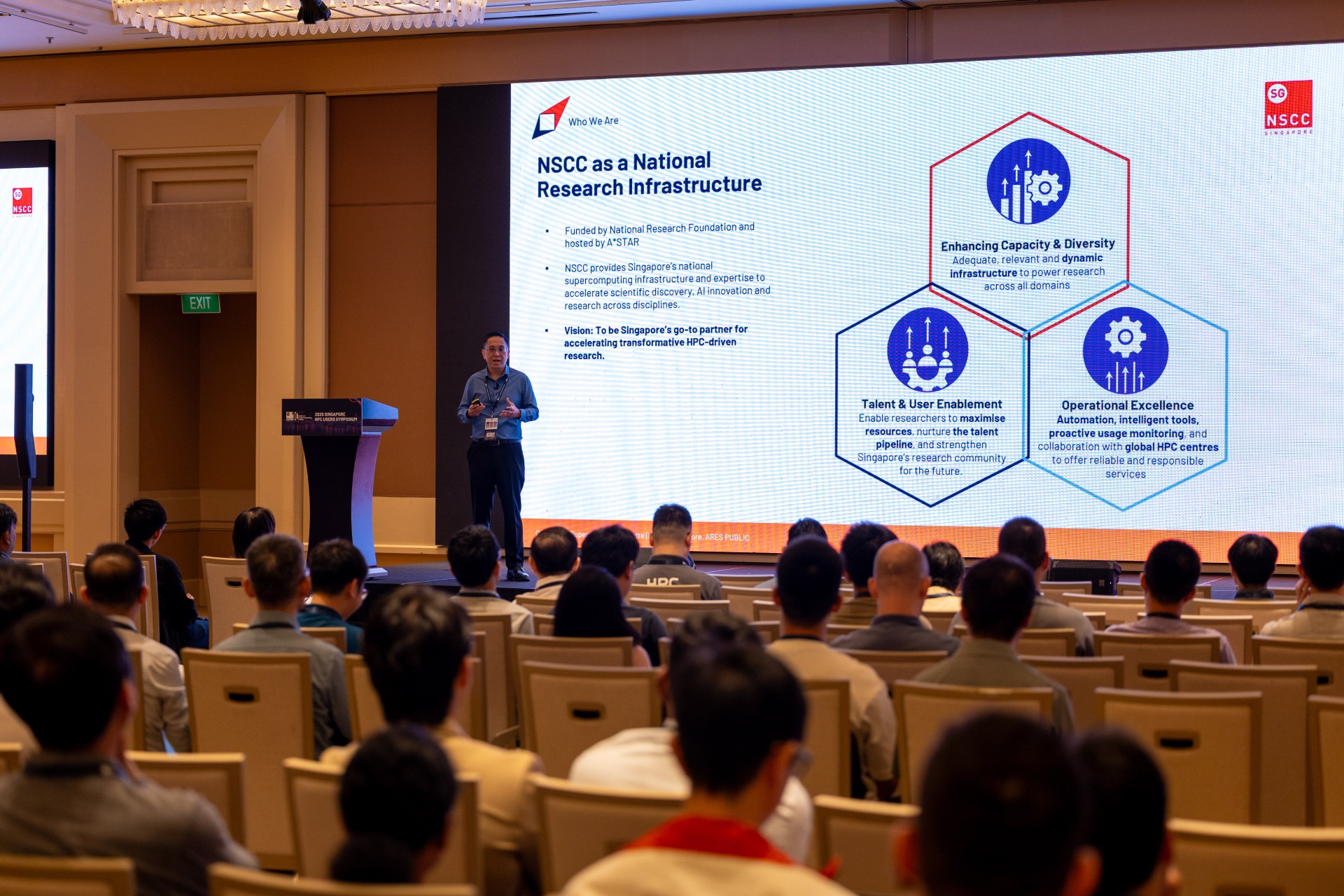
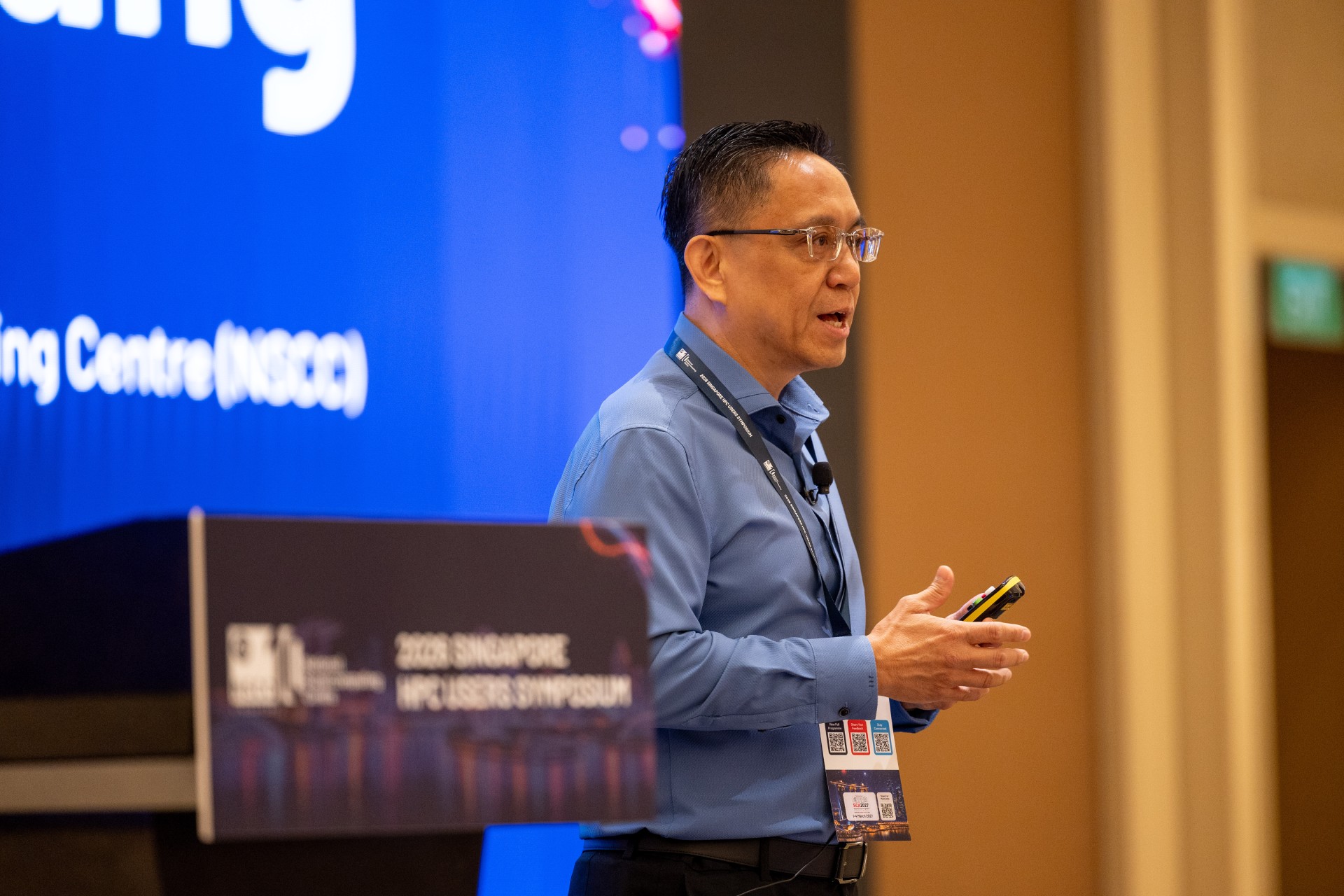
The symposium opened with an address by Dr Terence Hung, Executive Director of NSCC, who highlighted NSCC’s role as Singapore’s national supercomputing infrastructure supporting scientific discovery, AI innovation and research across disciplines. He also shared updates on Singapore’s growing capabilities across HPC, AI and quantum computing, as well as continued investments in research infrastructure, talent development and user enablement.
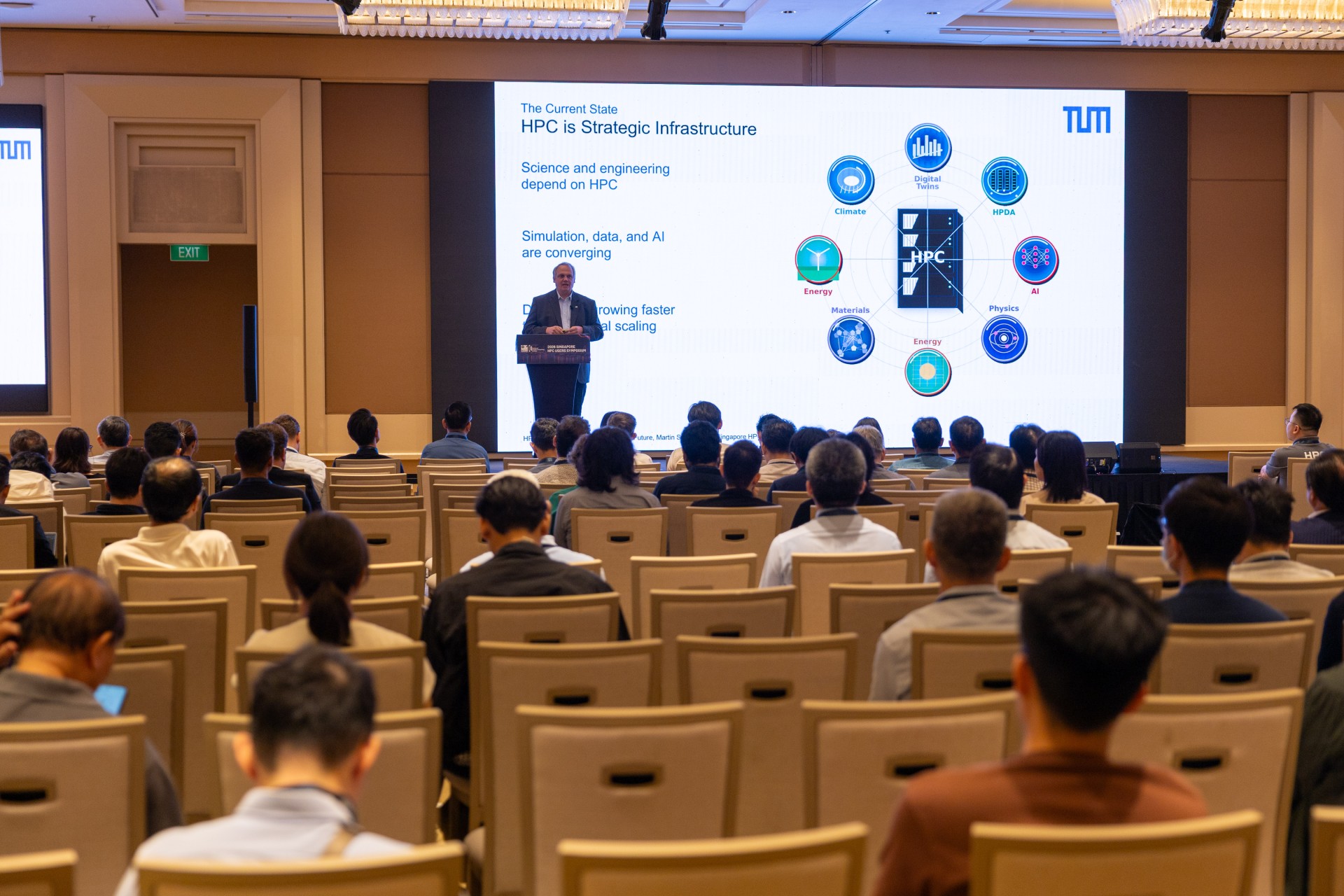
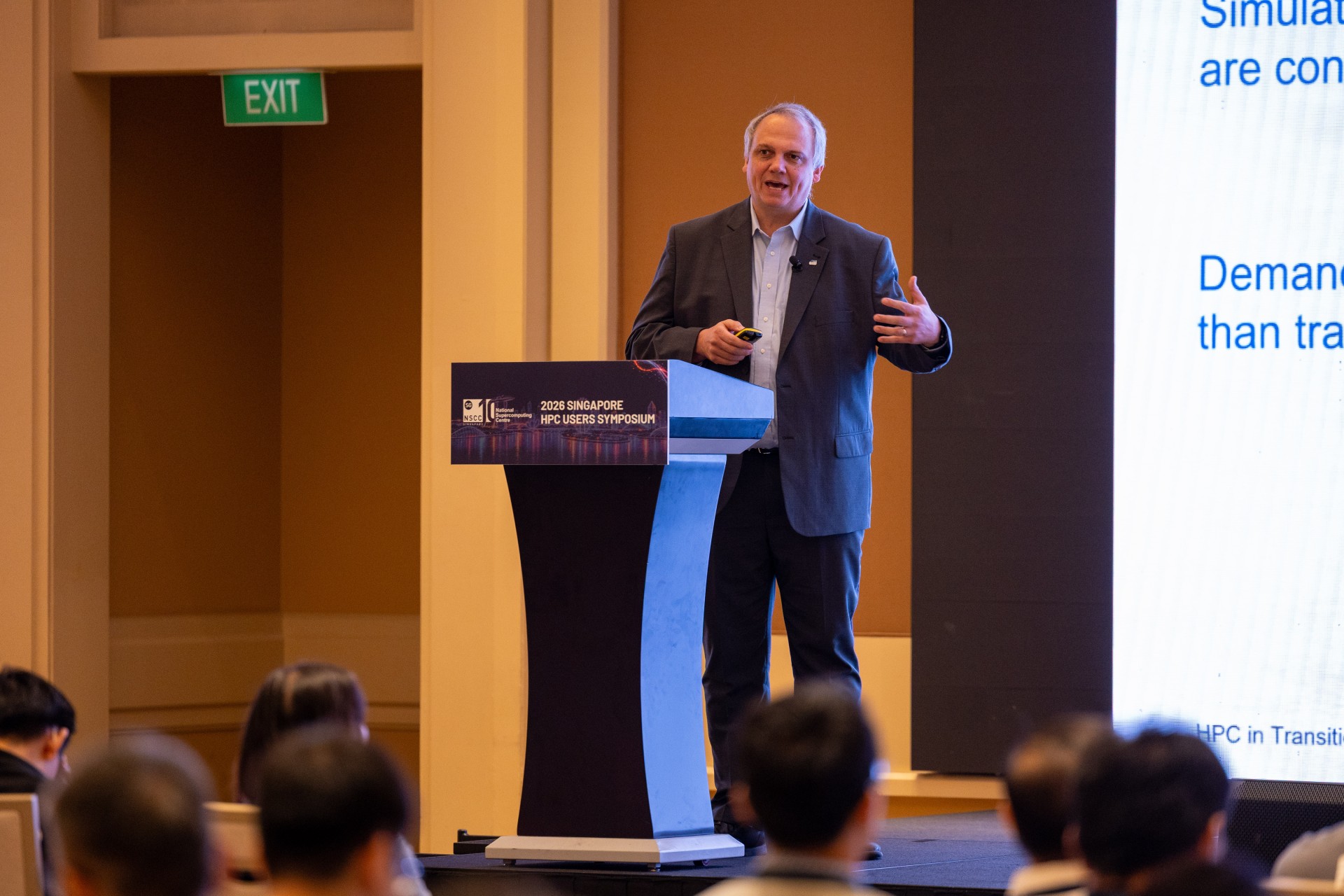
The first keynote, “HPC in Transition” was delivered by Prof Martin Schulz, Chair of Computer Architecture and Parallel Systems at the Technical University of Munich and board member of the Leibniz Supercomputing Centre.
Prof Schulz examined how HPC is evolving as AI, simulation and data-intensive research increasingly converge. He explored the emergence of heterogeneous computing architectures integrating CPUs, GPUs, quantum processors, neuromorphic systems and other specialised accelerators.
As computing environments become more complex, he emphasised the importance of software stacks, programming models and resource management in enabling researchers to effectively harness these diverse computing technologies for scientific discovery.
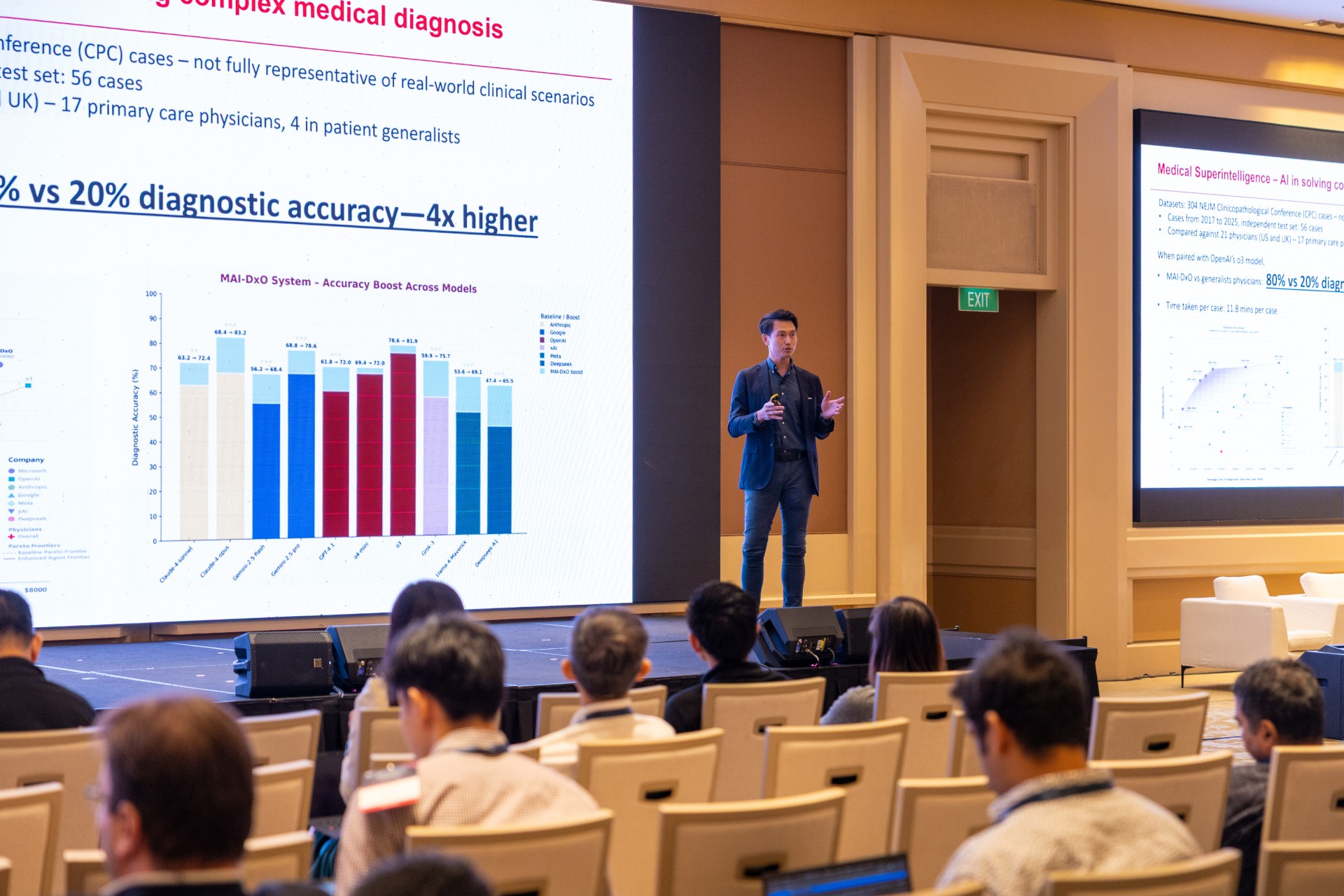
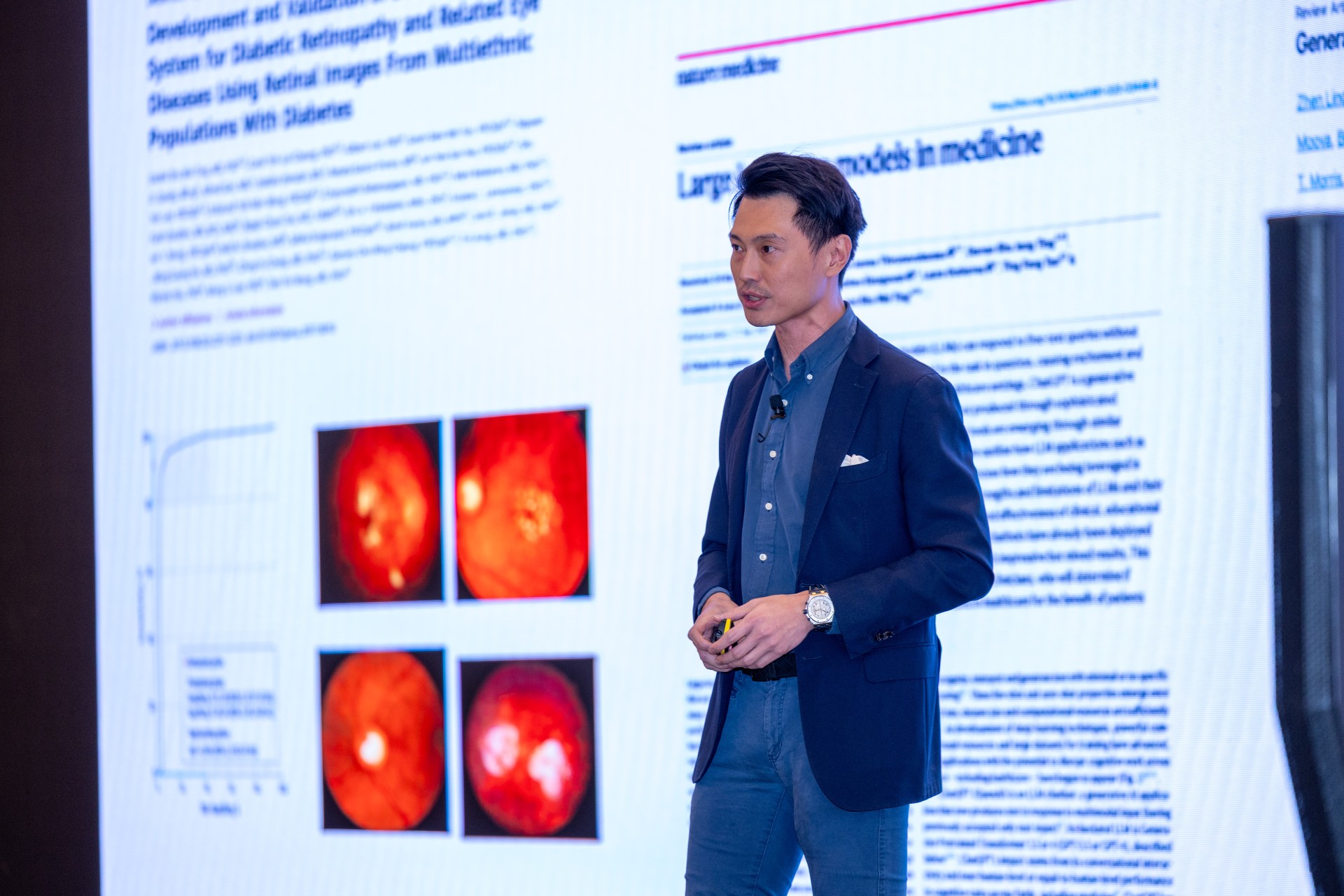
The second keynote, delivered by A/Prof Daniel Ting, explored the latest developments in generative AI and their implications for the future of healthcare. Drawing on advances in foundation models, multimodal AI, agentic AI and sovereign AI, he highlighted how these technologies are creating new opportunities to transform healthcare delivery, advance medical research and improve patient outcomes.
A key focus of the presentation was translating AI innovation into real-world applications, from augmenting healthcare professionals and improving operational efficiency to supporting better clinical decision-making. A/Prof Ting also shared insights into national initiatives such as the Singapore Medical Foundation AI Model (SIMFONI), which aims to develop AI tools that improve health outcomes, advance healthcare and AI research, and deliver value for Singapore.
Beyond technological advancements, the keynote underscored the importance of responsible AI adoption, particularly in areas such as governance, fairness, explainability and clinical validation, as AI applications move from research into real-world healthcare settings.
Exploring Opportunities and Challenges in the Evolving HPC Landscape
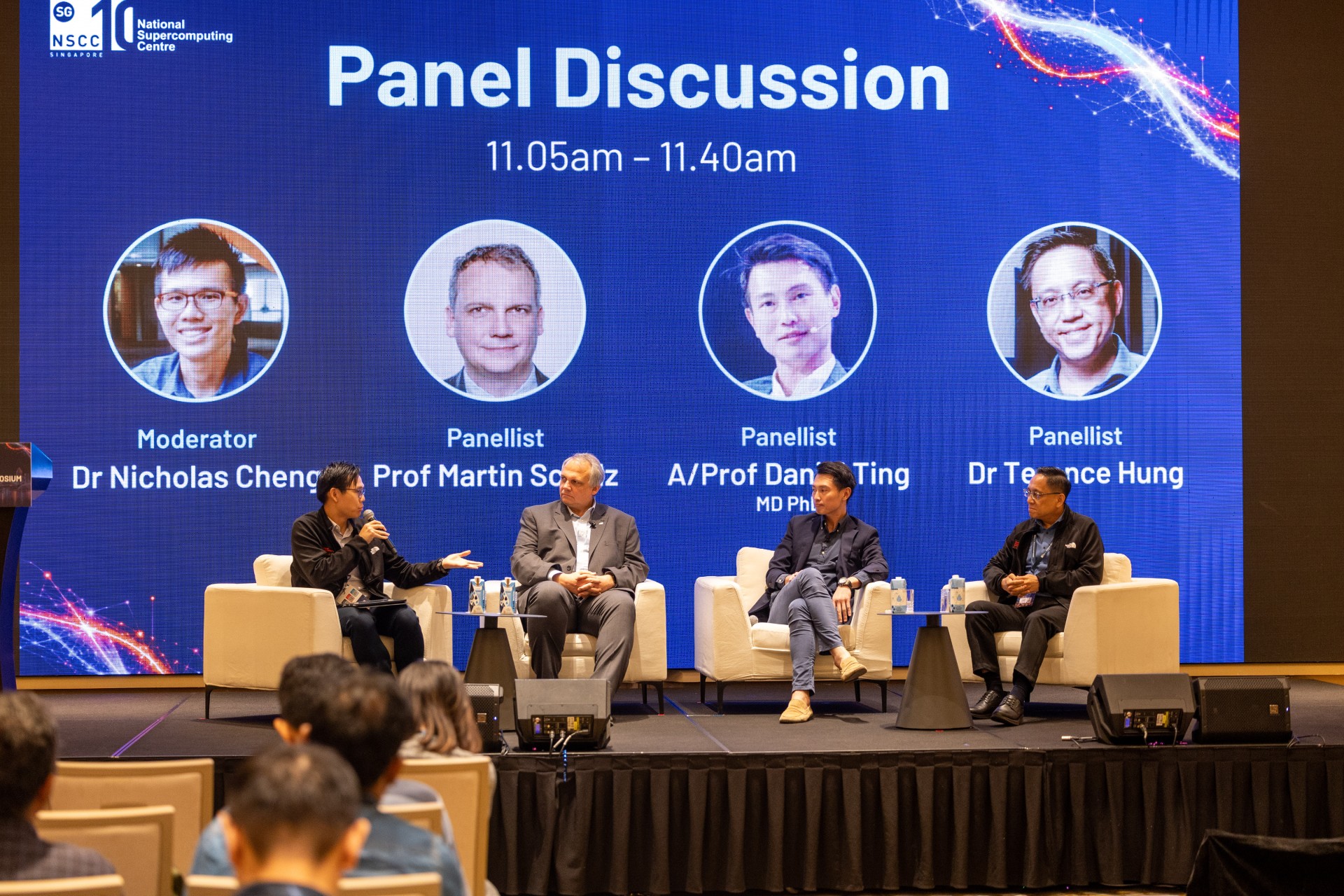
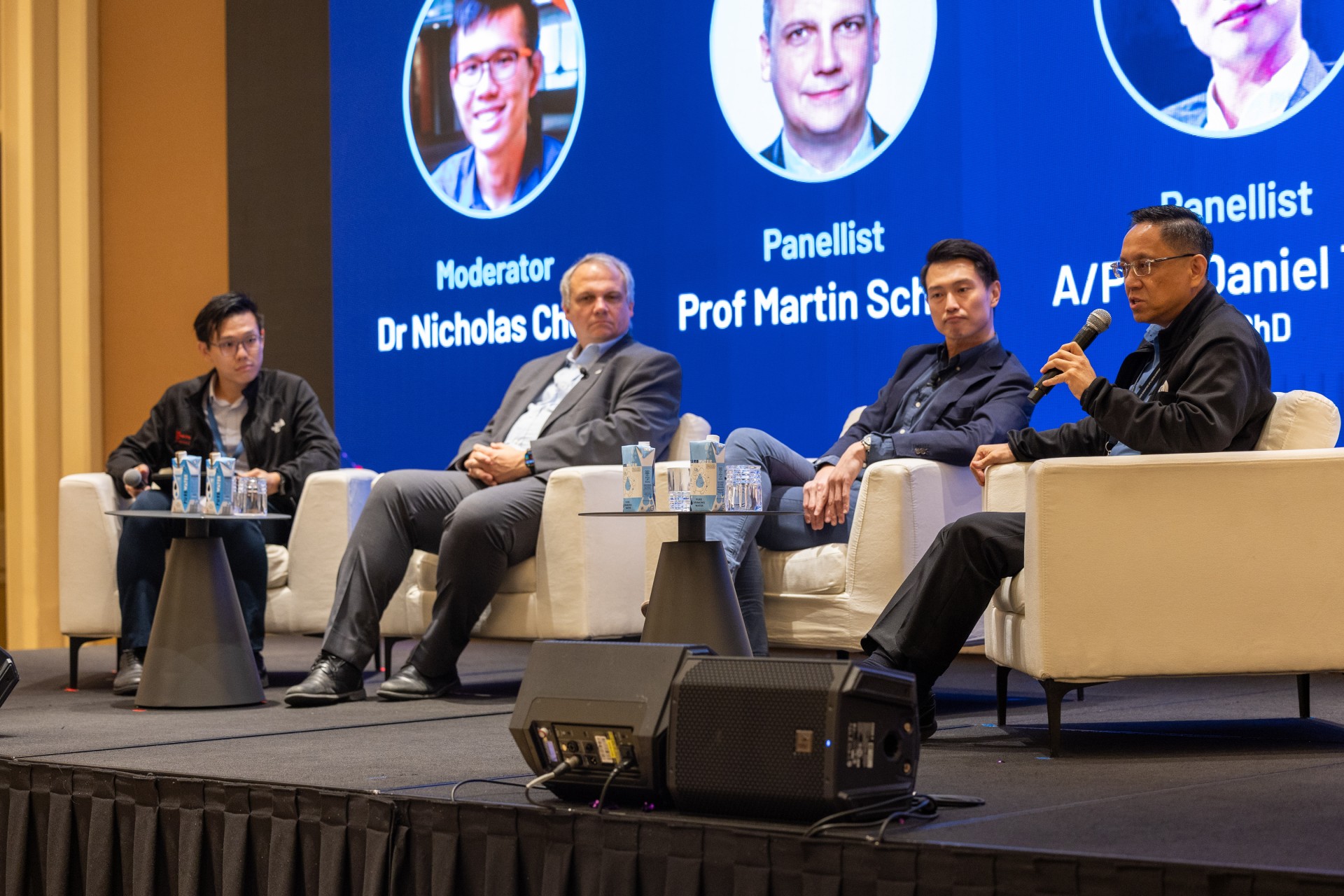
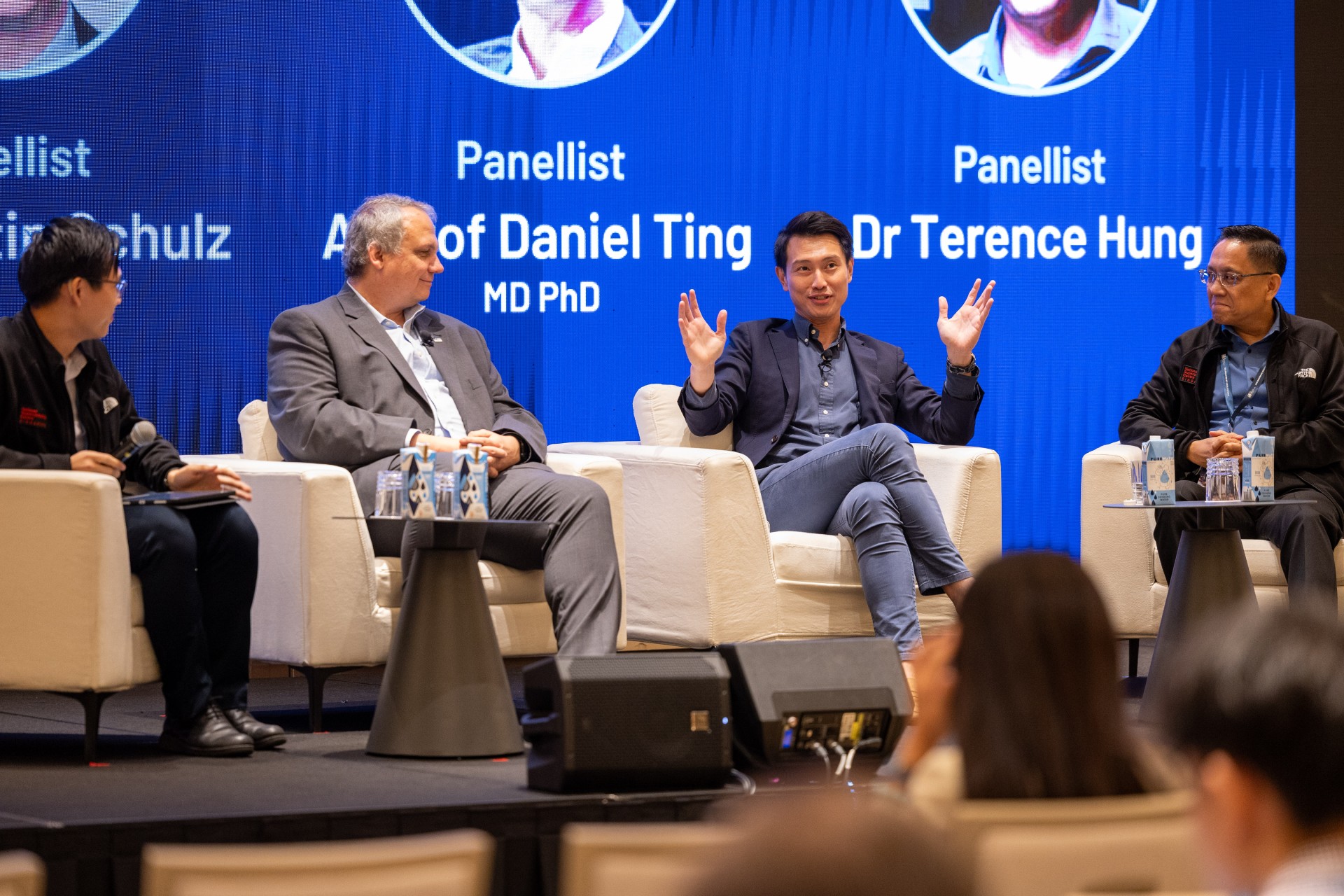
Building on the keynote presentations, a panel discussion moderated by Dr Nicholas Cheng from NSCC’s Frontier Team brought together Dr Terence Hung, Prof Martin Schulz and A/Prof Daniel Ting.
The panelists explored the opportunities and challenges arising from the convergence of HPC and AI, discussing how emerging computing technologies are reshaping research workflows and the considerations needed to translate technological advances into meaningful scientific and societal impact.
From Hackathon Innovations to Scientific Applications
The morning plenary concluded with presentations by two teams from the recent NSCC Open Hackathon, highlighting how computational optimisation can accelerate scientific research across different disciplines.
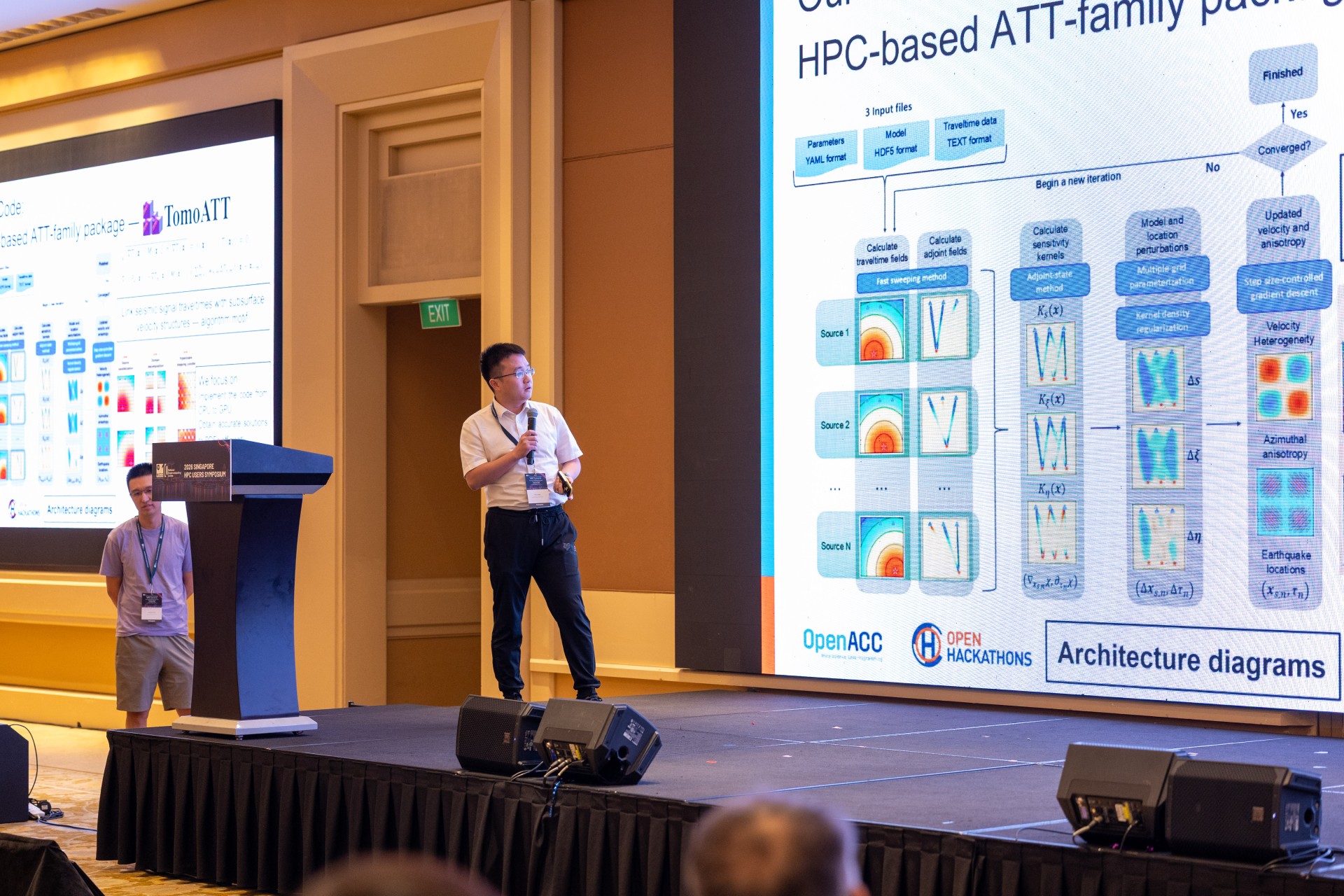
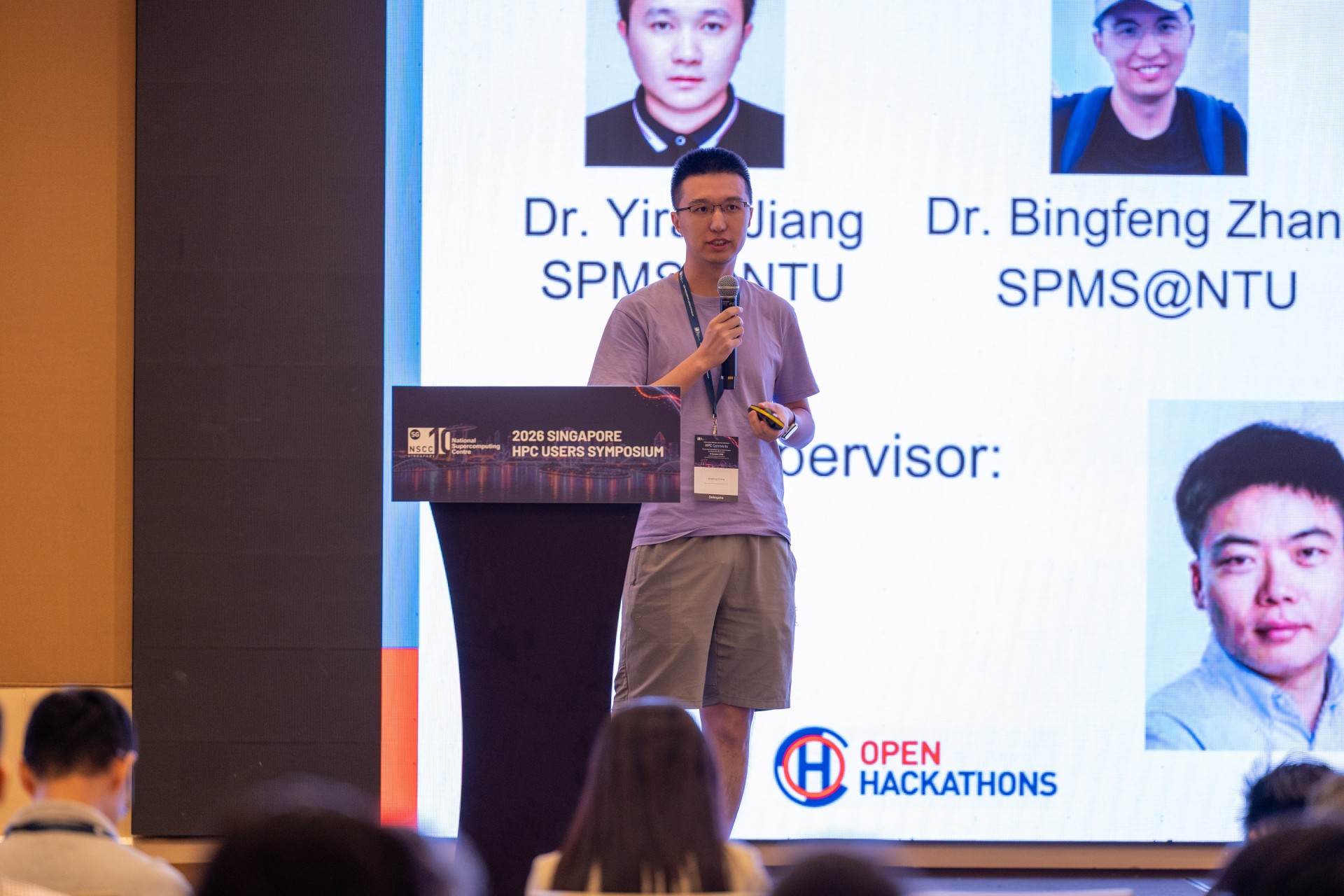
Dr Yiran Jiang and Dr Bingfeng Zhang from the Modelling Imaging Inversion Team, Nanyang Technological University (NTU), presented their project: “Building the Next Generation of Seismic Models in Japan”.
The team enhanced the HPC-based tomography package TomoATT through GPU porting and optimisation strategies that improved efficiency and scalability for large-scale seismic imaging, supporting applications such as hazard assessment, earthquake early warning and tsunami studies.
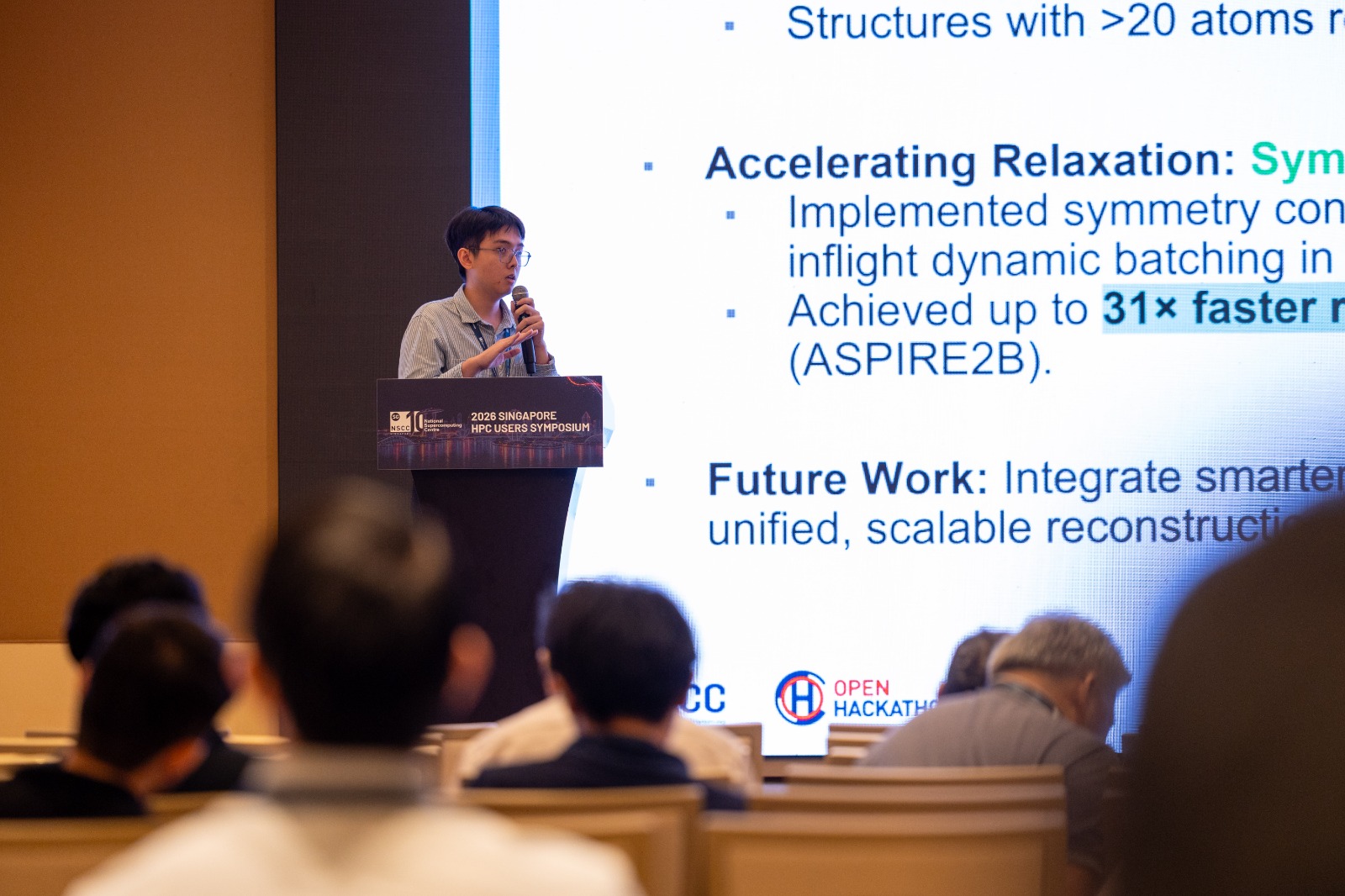
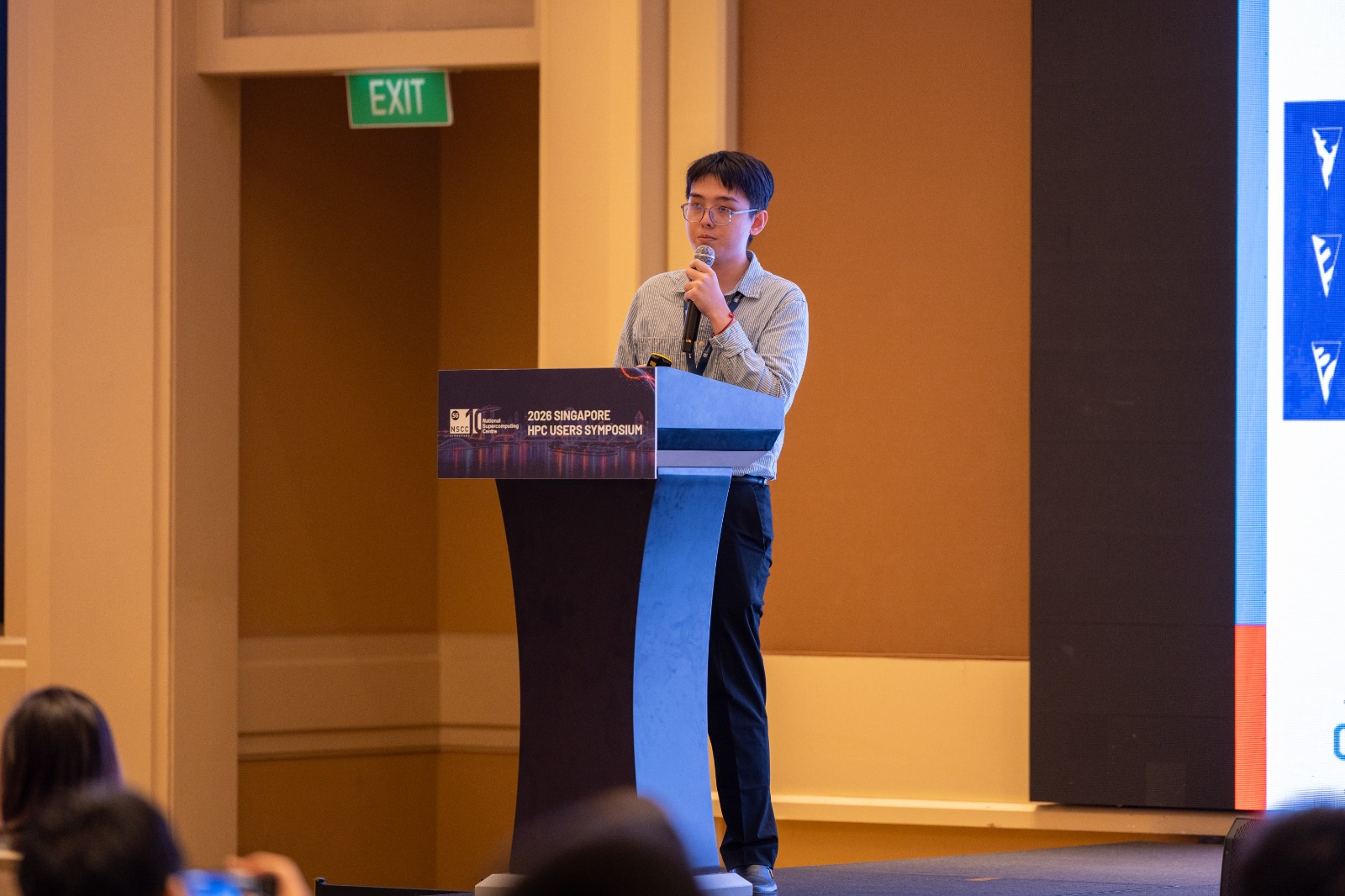
Cheah Jia Tai from Team Bits2Atoms presented: “Accelerating Wyckoff Gene-to-Structure Reconstruction through HPC and GPU-Native Optimisation”.
By combining improved sampling methods with GPU-native optimisation techniques, the team achieved higher reconstruction accuracy and significantly accelerated crystal structure relaxation workflows, demonstrating how HPC can support faster materials discovery.
Together, the projects demonstrated the breadth of scientific challenges that can be addressed through HPC, from imaging the Earth’s subsurface structures to advancing materials research at the atomic scale.
Research Track: How Researchers are Using Advanced Computing to Address Real-World and Scientific Challenges
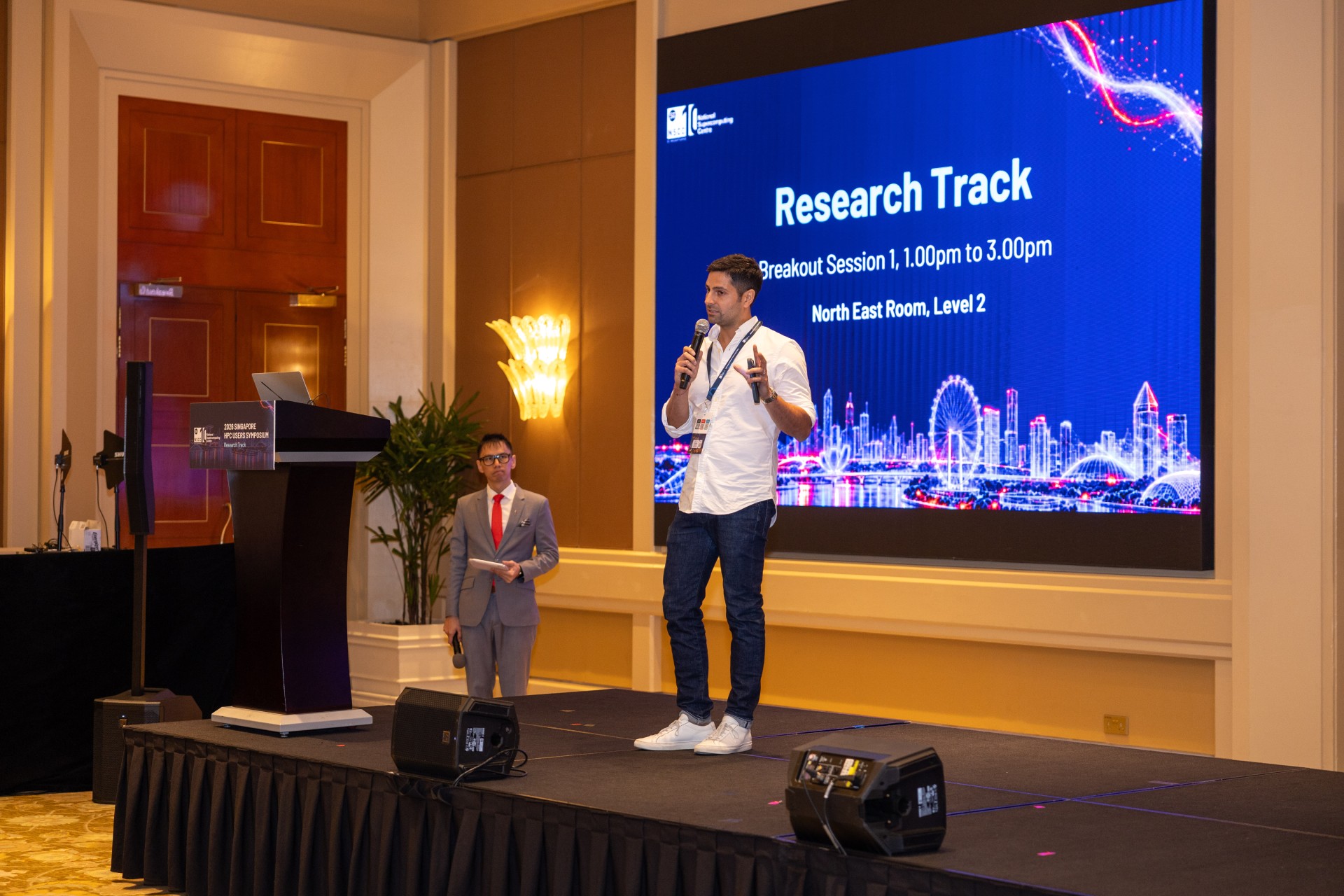
Chaired by Dr Daniel Wise, Principal Scientist I at A*STAR’s Institute of Advanced Intelligence and Computing (IAIC), the Research Track brought together researchers applying HPC, AI and advanced computational methods to address complex challenges across fusion energy, climate science, computational chemistry, geophysics and materials research.
Presentations featured:
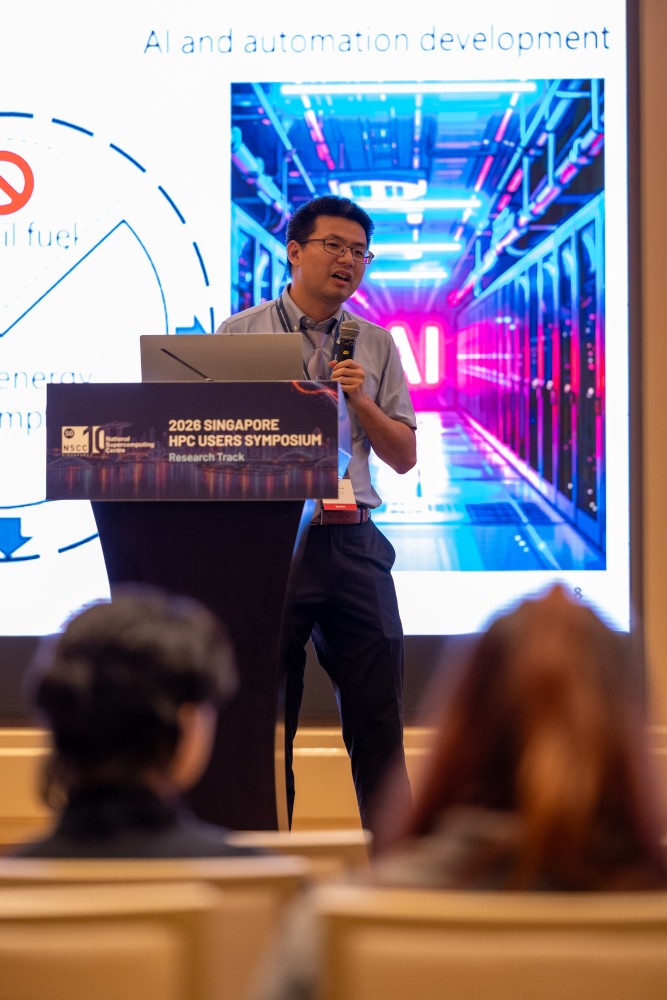
Digital Twin Development for Taiwan’s tokamak (FIRST) research: Multi-Scale Plasma Simulation, AI Equilibrium Reconstruction, and 3D Visualization
Dr Yi-Cheng Chuang
Project assistant researcher, National Center for High-performance Computing (NCHC), National Institutes of Applied Research
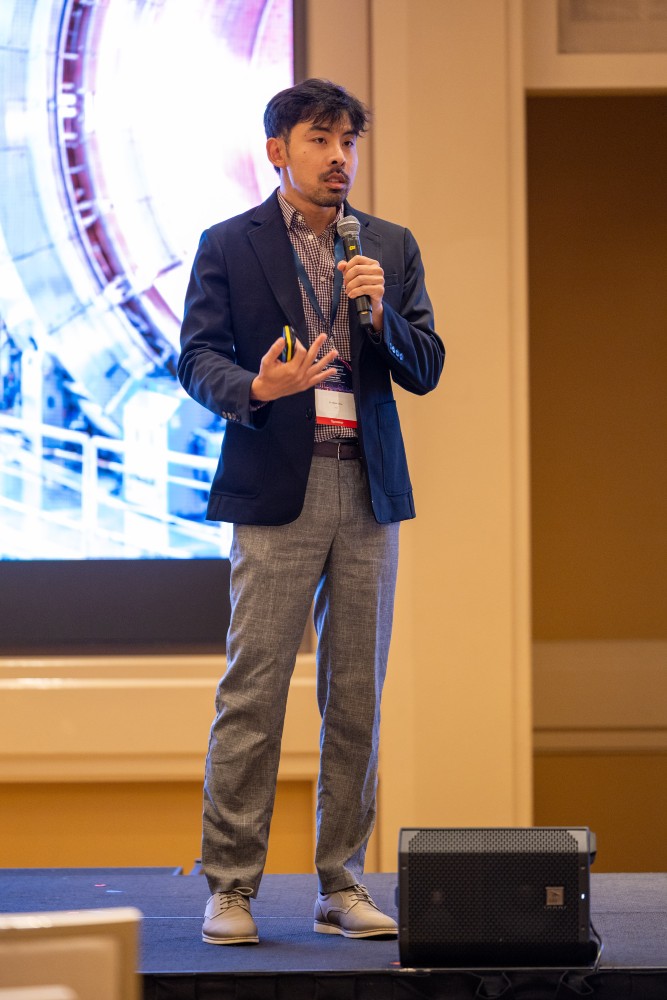
Addressing Fusion Energy Challenges through Multiscale Simulation and AI
Dr Eddie Chua
Senior Scientist; Co-lead, Plasma Physics & Diagnostics, Agency for Science, Technology and Research Future Energy Acceleration and Translation Centre (A*STAR FEAT)
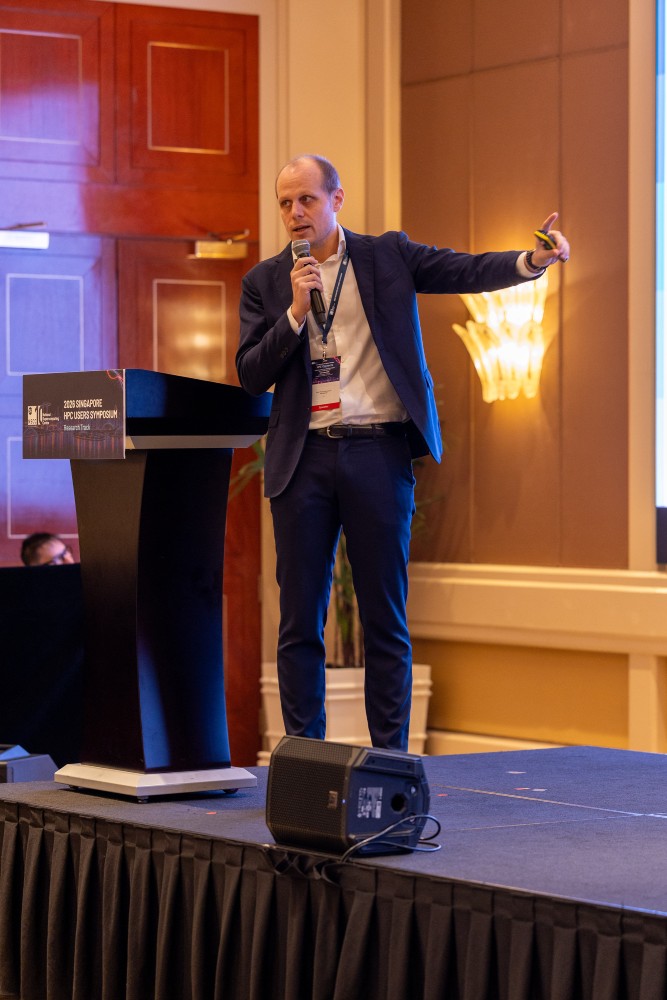
From Physics to AI and back
Asst Prof Gianmarco Mengaldo
Assistant Professor, National University of Singapore (NUS)
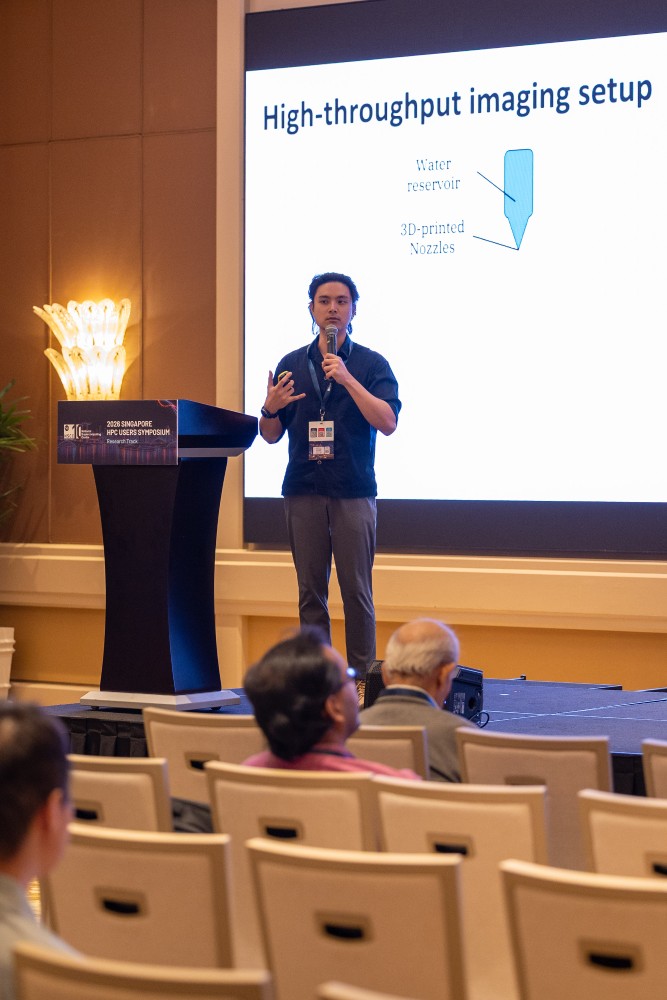
Token Cartography: principled applications of machine learning techniques to retain scientific interpretability
Mr Ervin Chia
Doctoral Candidate, Final Year (Physics), National University of Singapore, Department of Physics & Centre of Bio-imaging Sciences
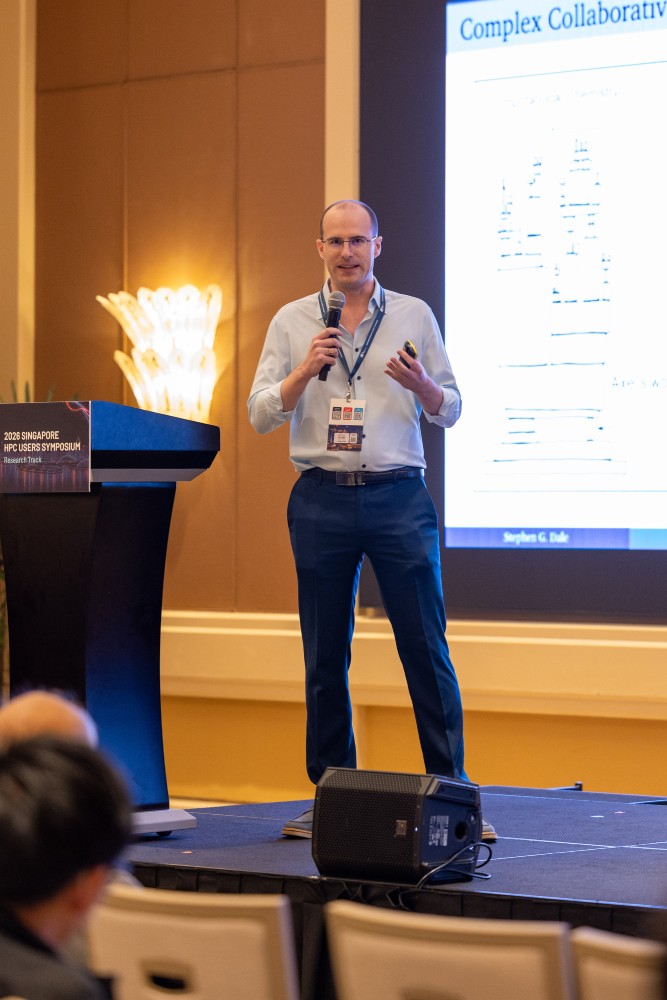
Navigating Chemical Space: Techniques for mapping chemistry for molecular identification and reaction path discovery.
Asst Prof Stephen Dale
Assistant Professor, The Institute of Functional Intelligent Materials (I-FIM), and the Department of Materials Science and Engineering, National University of Singapore
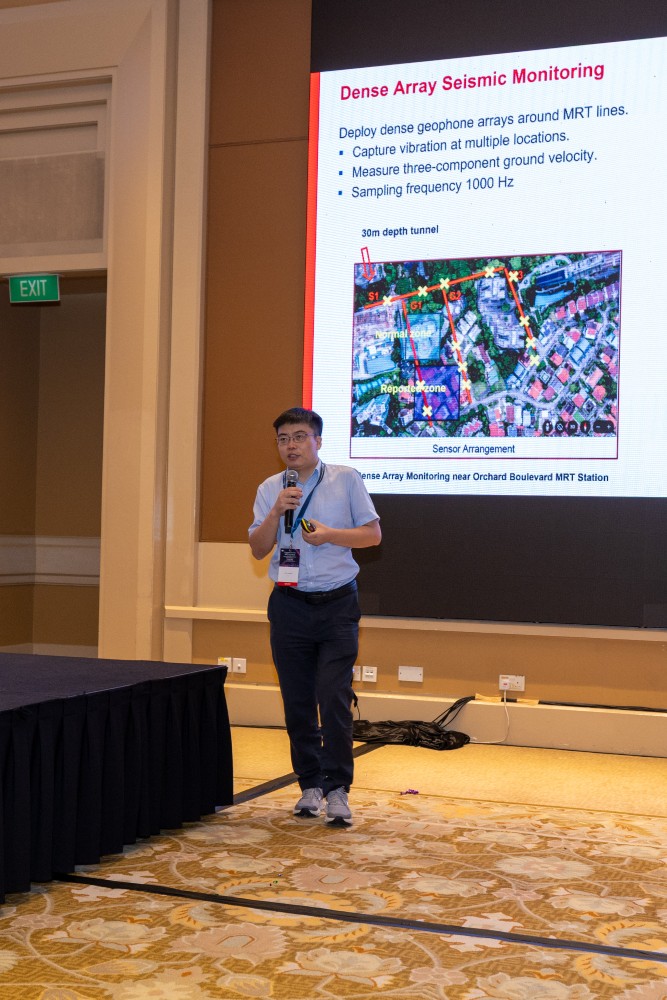
Revealing Earth’s Interior with TomoATT: HPC-Enabled Seismic Imaging and Discovery
A/Prof Tong Ping
Associate Professor, Division of Mathematical Sciences, School of Physical and Mathematical Sciences; Principal Investigator, Earth Observatory of Singapore, Nanyang Technological University, Singapore
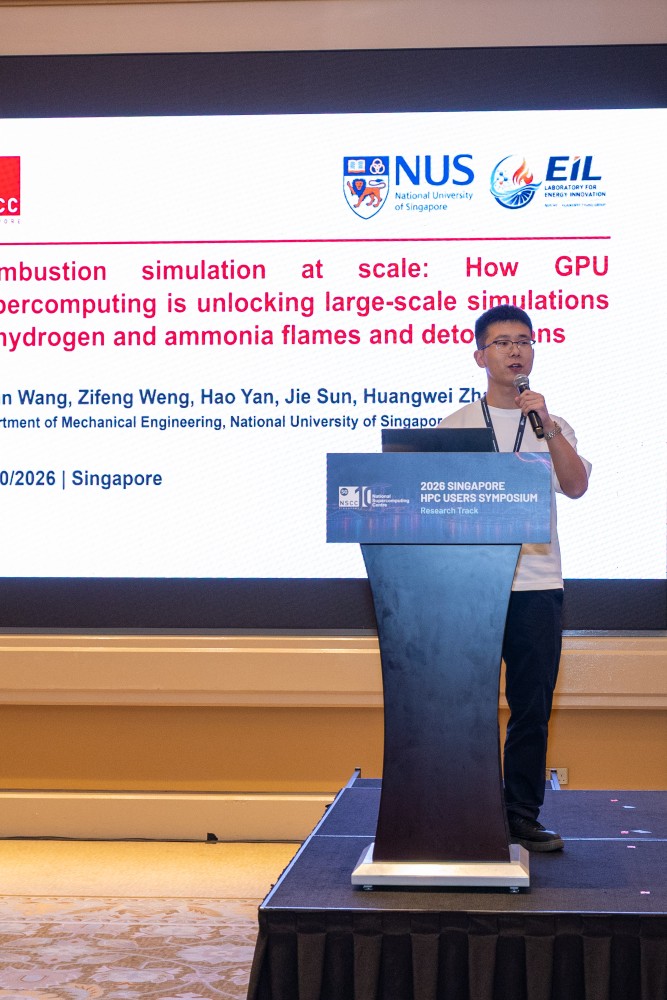
Combustion simulation at scale: How GPU supercomputing is unlocking large-scale simulations of hydrogen and ammonia flames and detonations
Dr Wang Yicun
Postdoctoral Research Fellow, Department of Mechanical Engineering, National University of Singapore
Technology Track: The Technologies, Applications, Algorithms and Approaches Being Used to Solve Computational Challenges
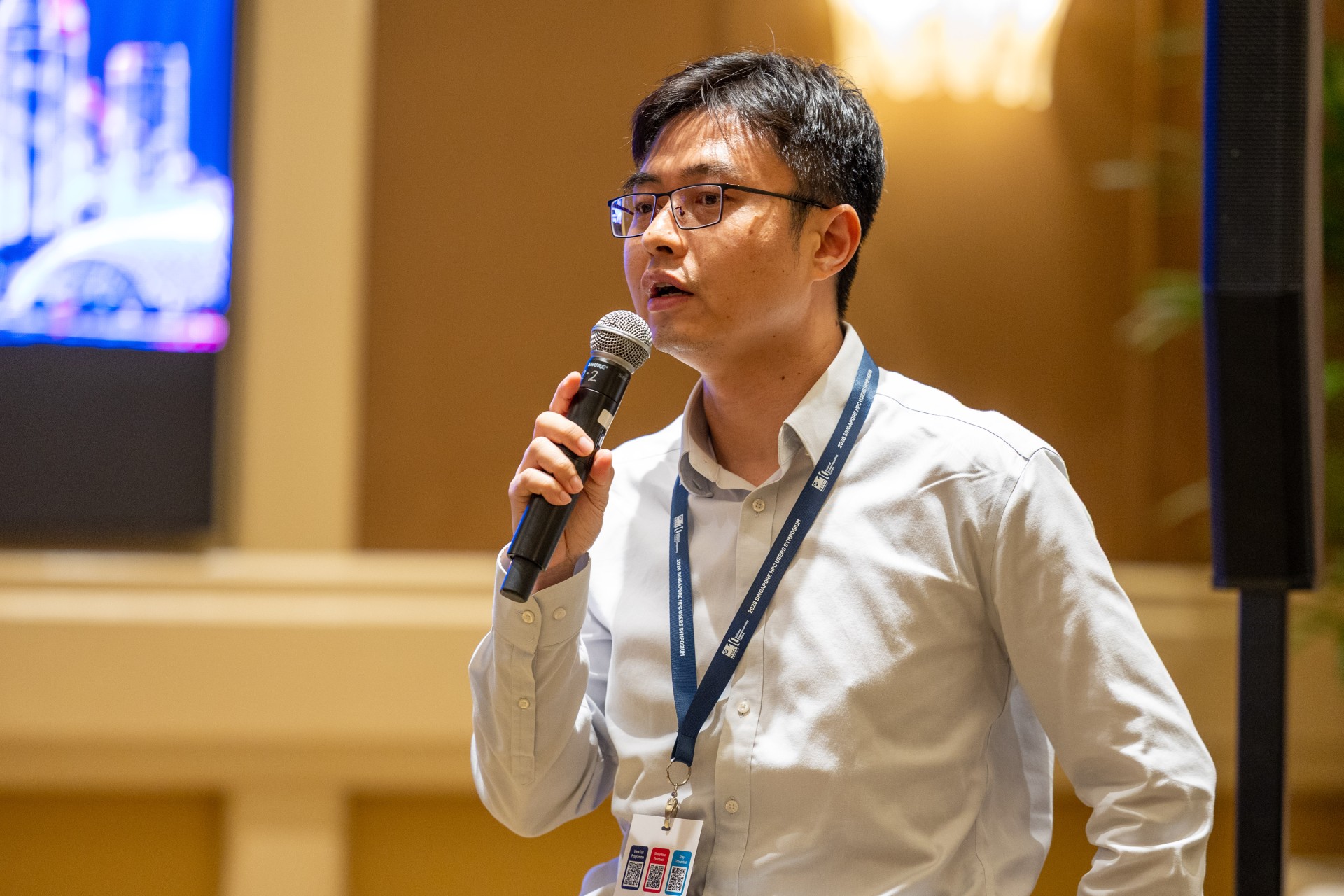
The Technology Track, co-chaired by Dr Yang Li Wei, Senior Scientist at A*STAR IAIC, and Asst Prof Wang Chen, Assistant Professor at NTU’s College of Computing and Data Science, explored the technologies, platforms, algorithms and computational approaches underpinning the next generation of scientific discovery.
The sessions examined developments in GPU computing, AI-for-Science infrastructure, hybrid quantum-classical computing and distributed systems, highlighting the importance of building computational environments that can support increasingly complex and diverse research workloads
Presentations featured:
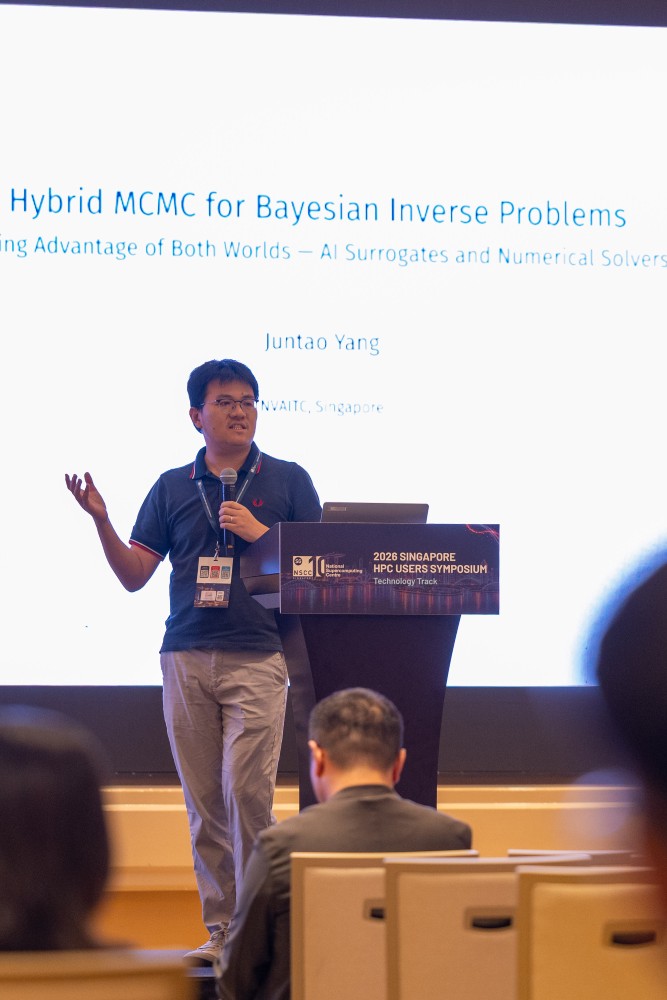
Hybrid MCMC for Bayesian Inverse Problem, Taking Advantage of Both World – AI Surrogate and Numerical
Dr Yang Jun Tao
Solutions Architect, NVIDIA Singapore
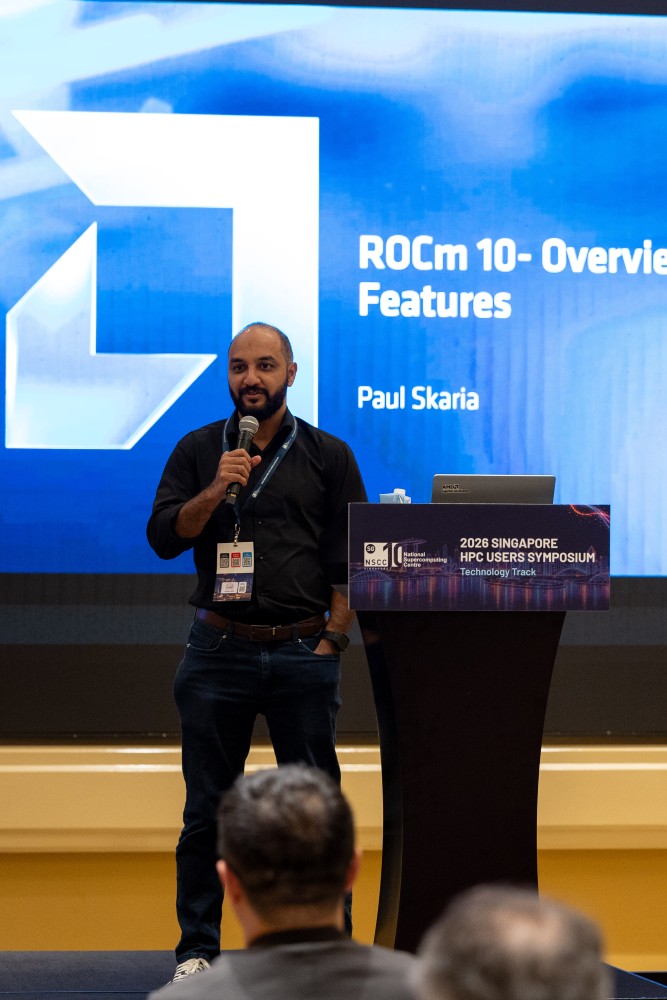
ROCm 10: A deep dive
Mr Paul Skaria
Solution Lead, AMD
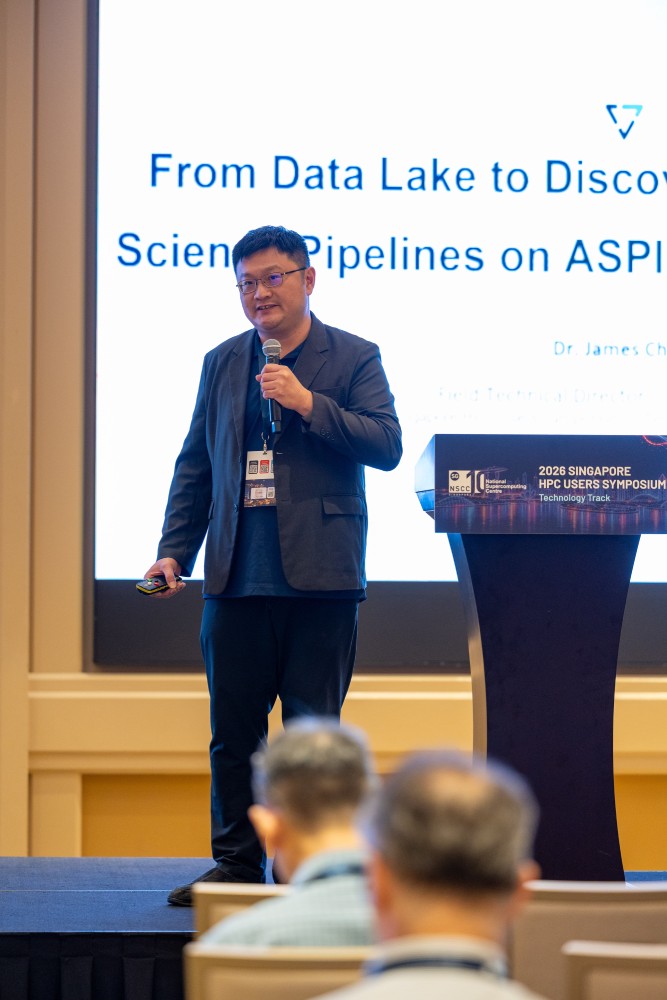
From Data Lake to Discovery: Building AI-for-Science Pipelines on ASPIRE 2B’s Data Platform
Dr James Chen
Field Technical Director – HPC, VAST Data
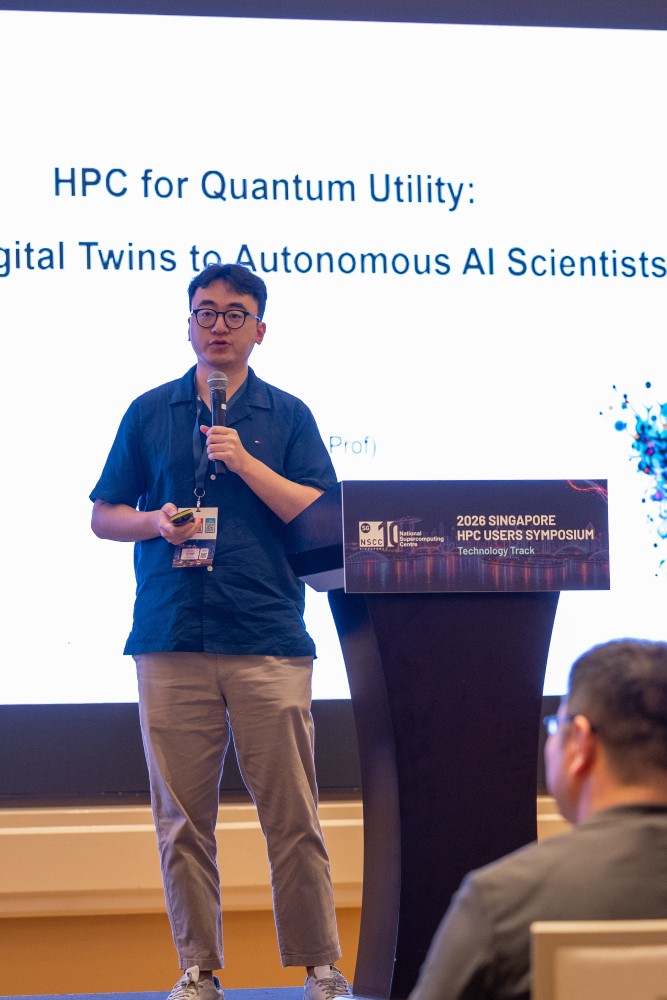
HPC for Quantum Utility: From Digital Twins to Autonomous AI Scientists
Asst Prof Du Yu Xuan
Assistant Professor, Nanyang Technological University (NTU)
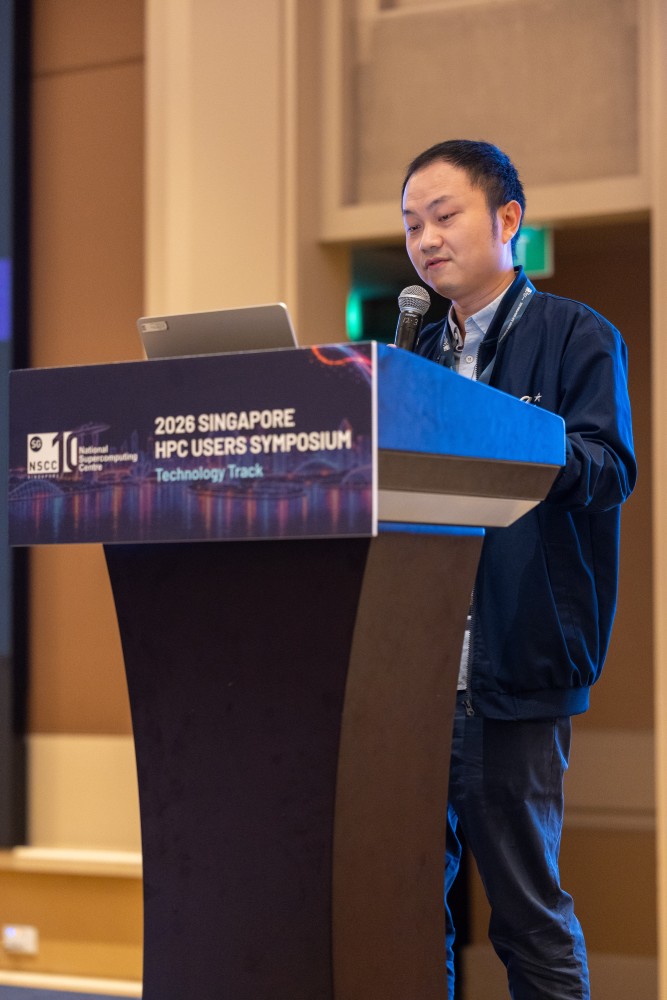
Designing Hybrid Quantum–Classical Systems Before Deployment: Insights from HybridTwin
Dr Luo Tao
Senior Scientist & Chapter Head of HPC chapter, A*STAR IAIC
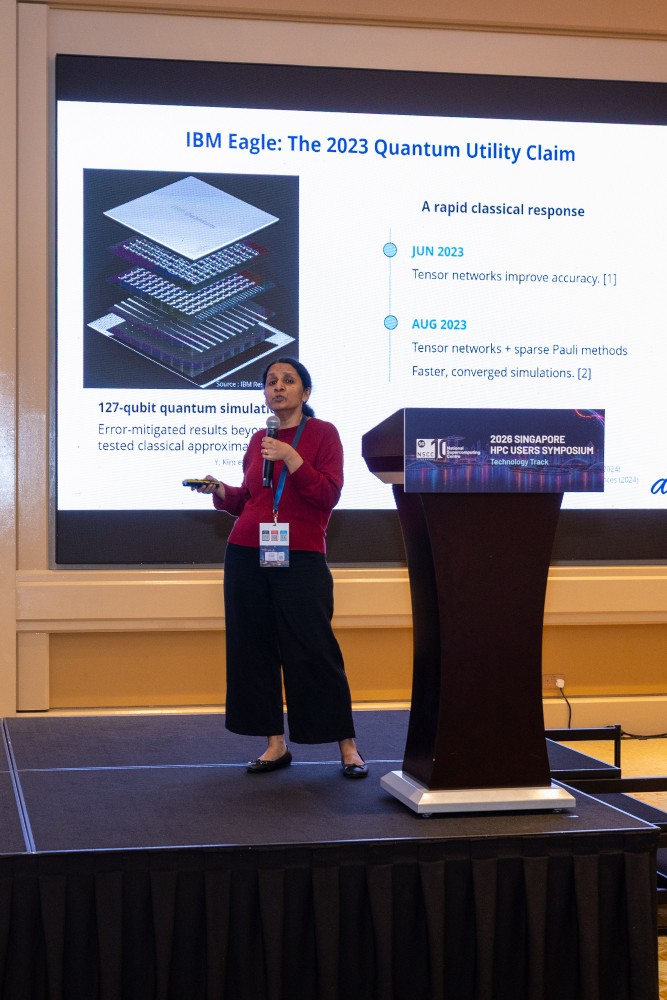
AI-Guided Tensor-Network Simulation for Large-Scale Quantum Computing on HPC Systems
Dr Vinitha Balachandran
Senior Scientist, Institute of Advanced Intelligence and Computing (IAIC), A*STAR, Singapore
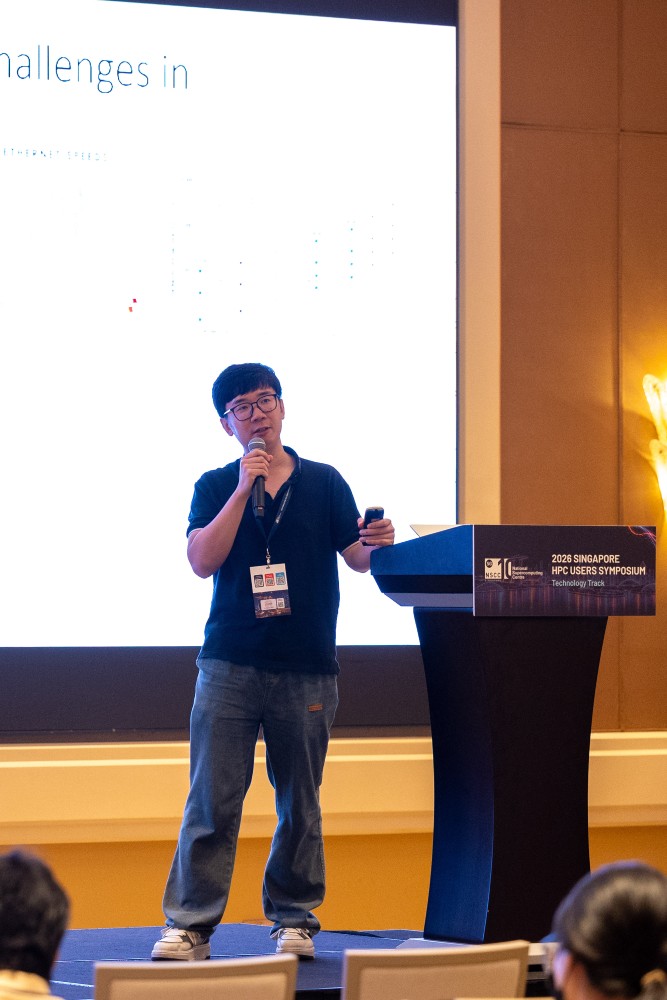
Co-Designing Data Center Networks and Distributed Systems
Asst Prof Li Jia Lin
Sung Kah Kay Assistant Professor, NUS
Connecting Singapore’s HPC Community
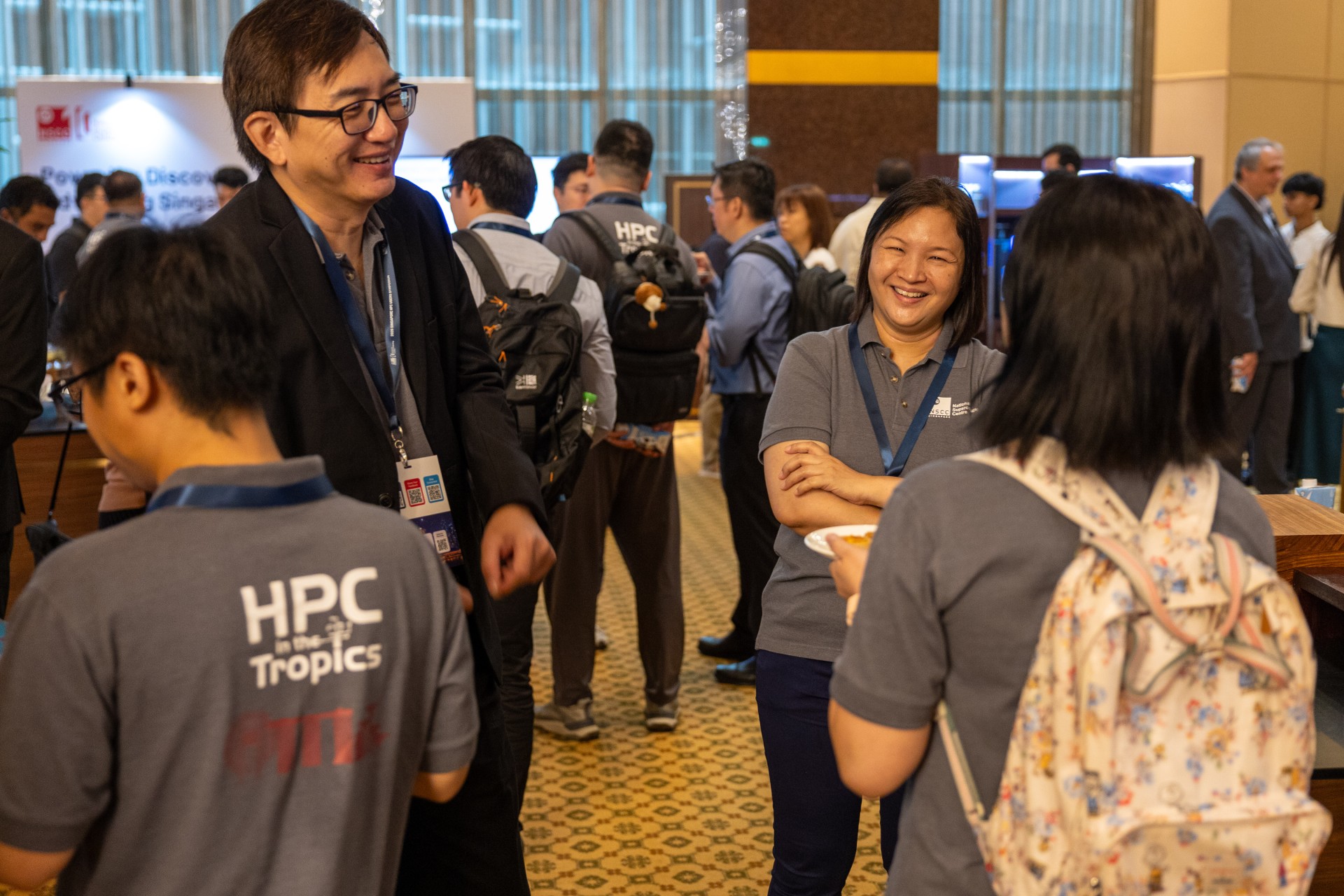
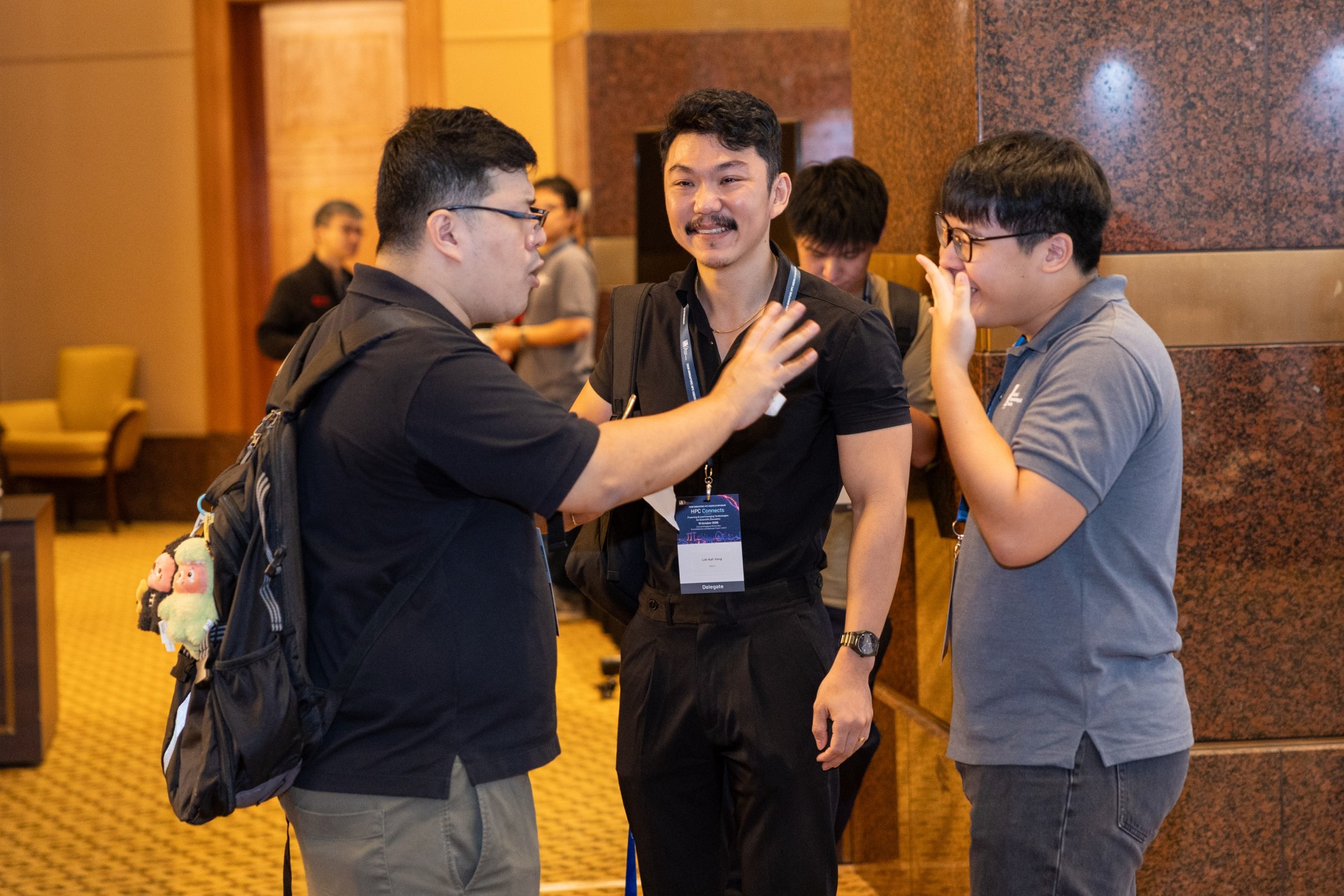
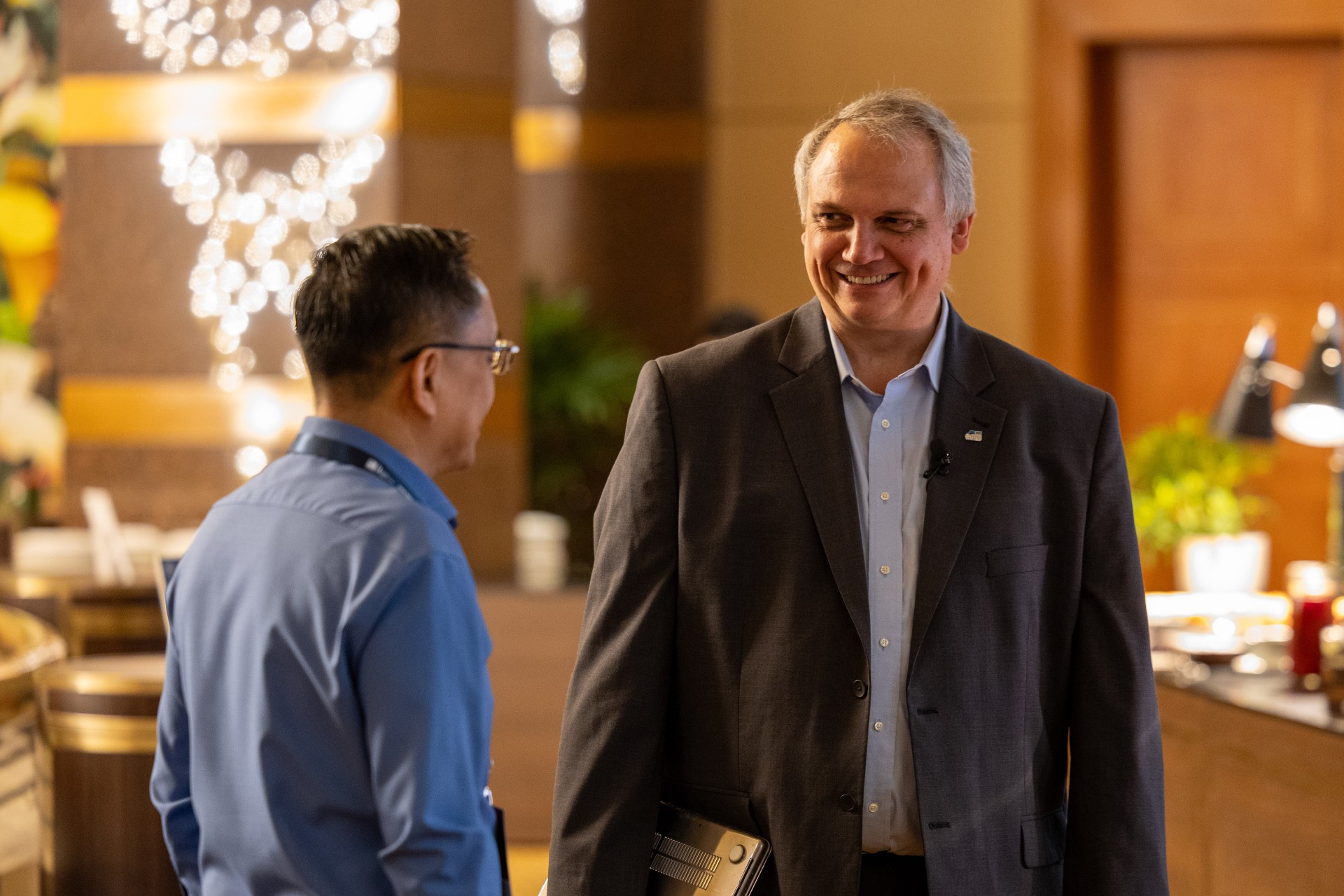
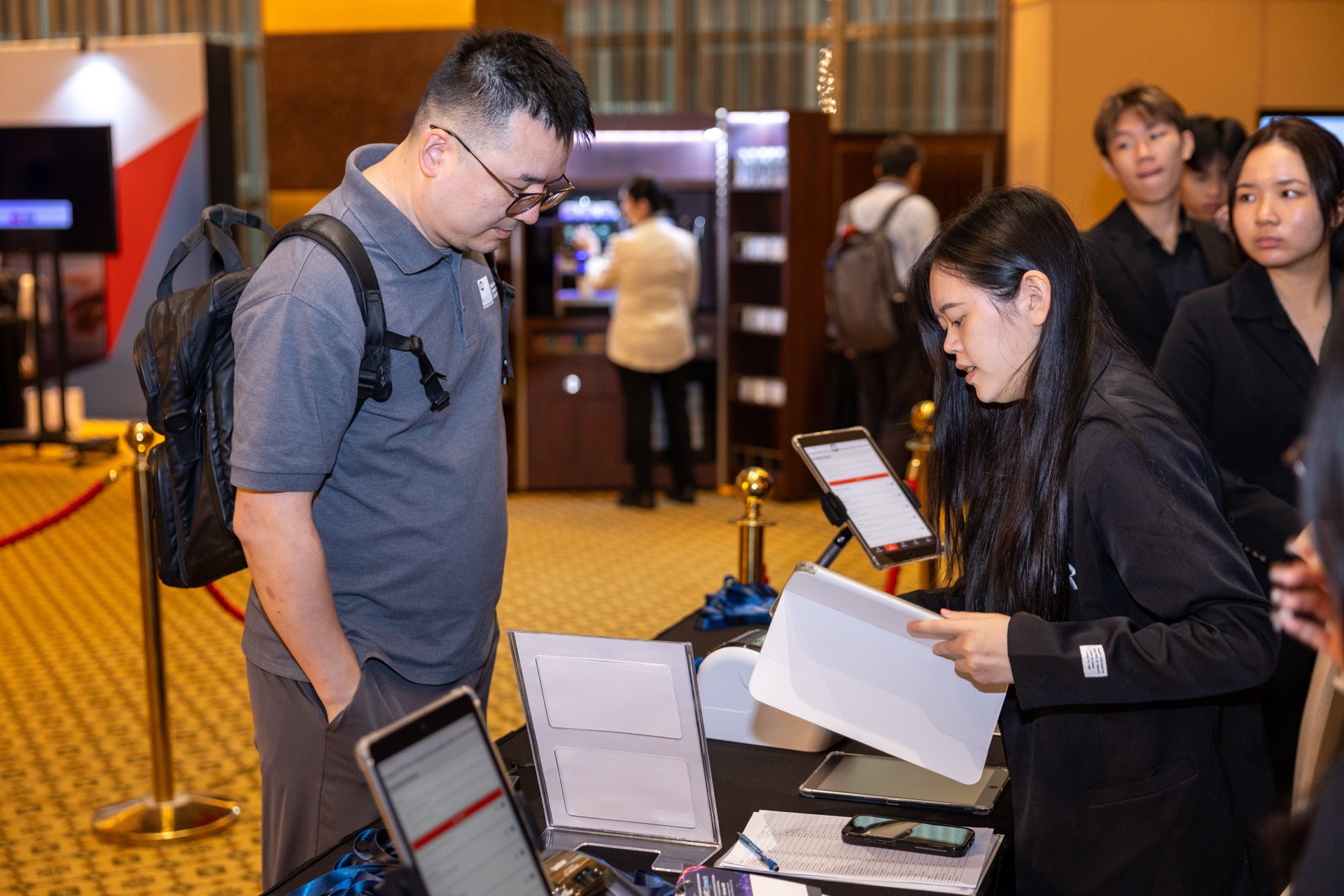
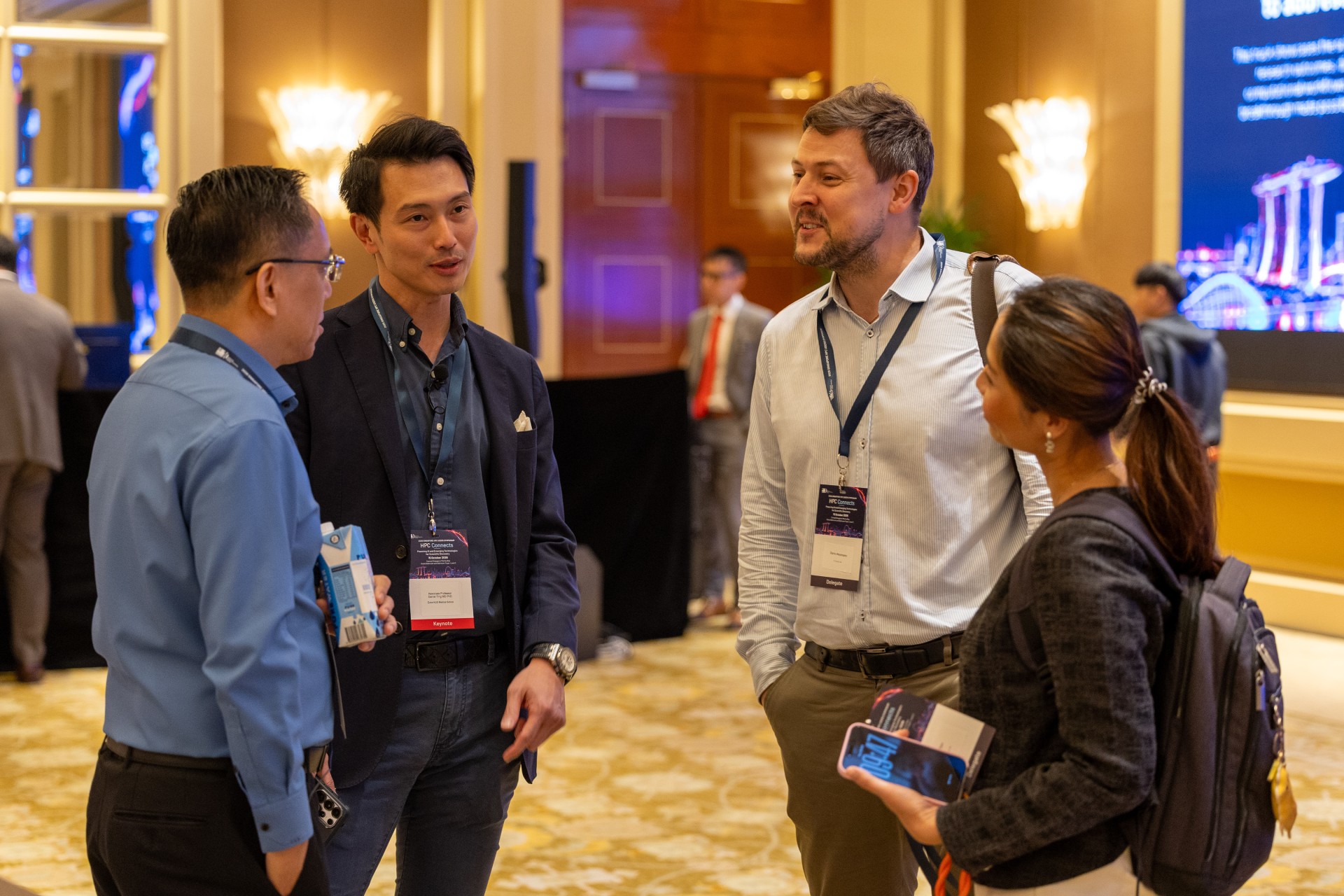
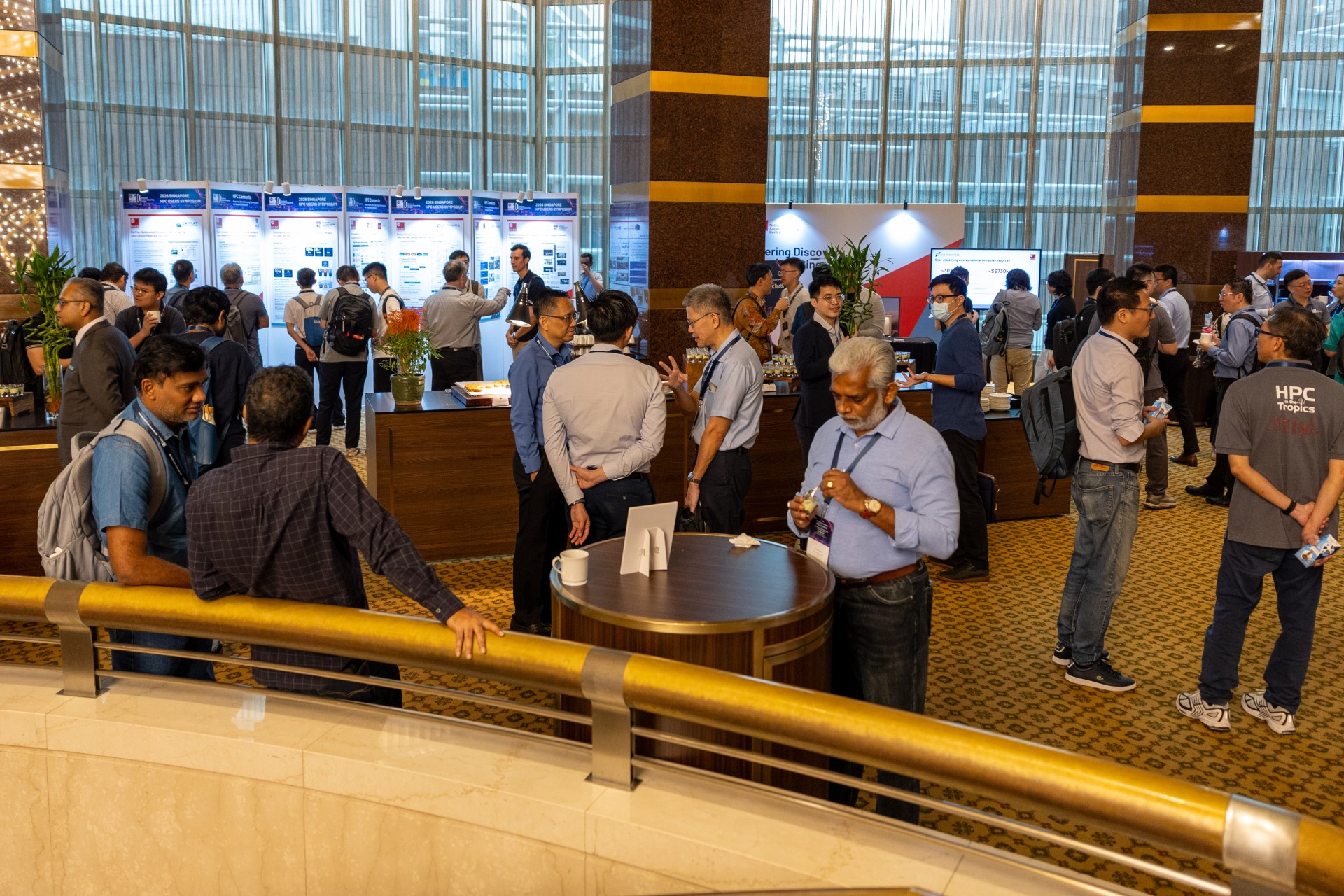
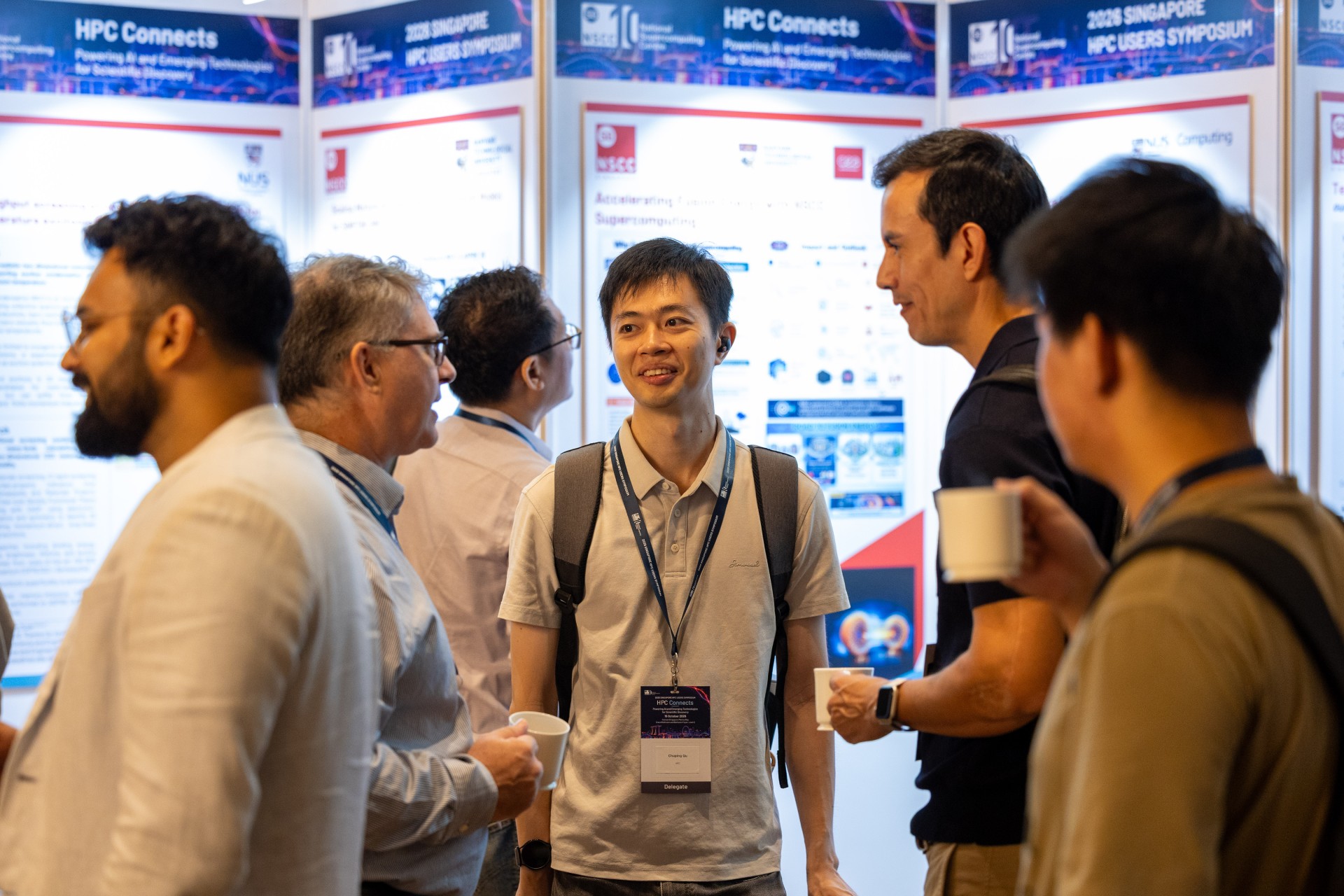
Beyond the formal programme, the symposium provided opportunities for participants to connect with fellow researchers, exchange ideas and learn more about the resources available within Singapore’s HPC ecosystem.
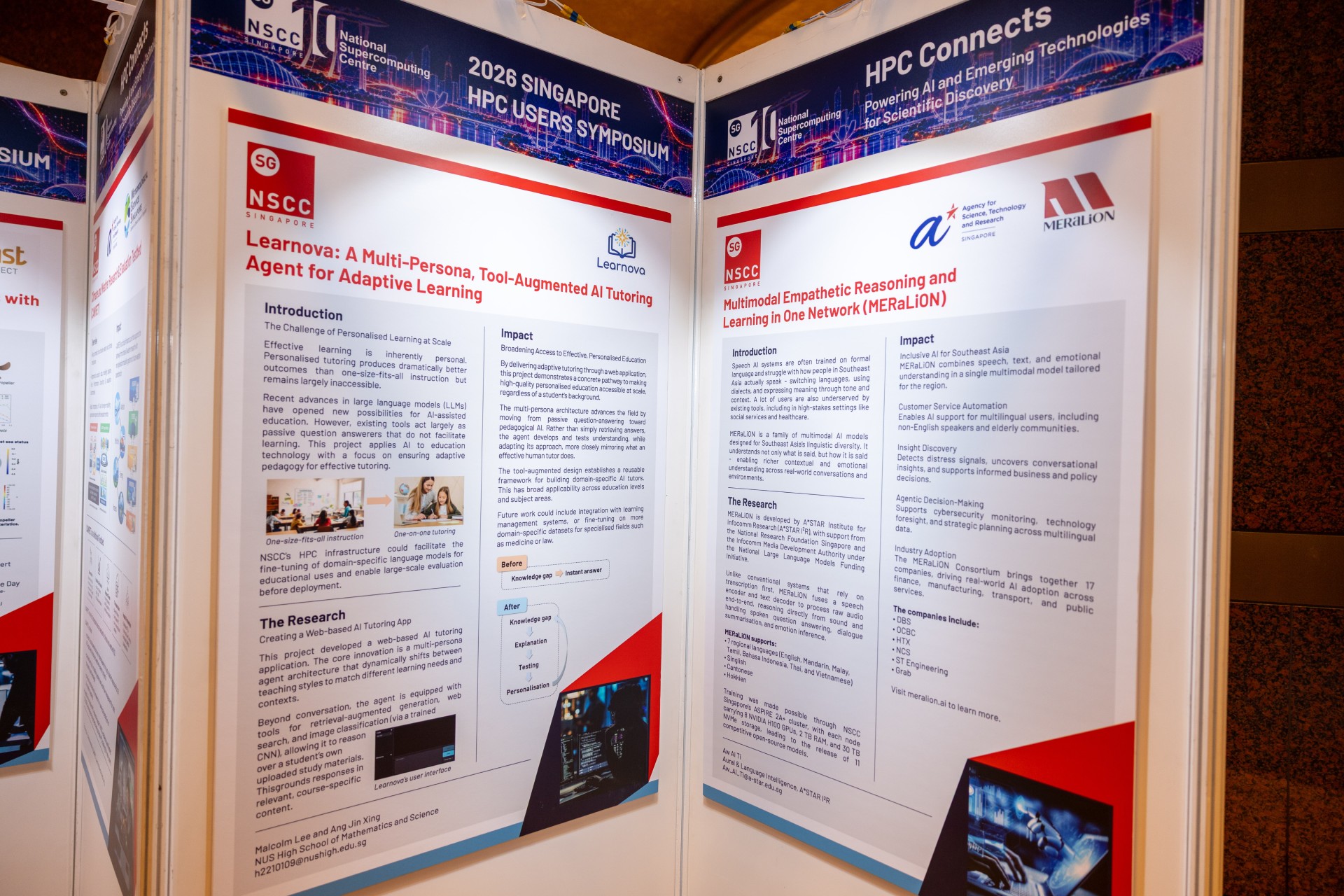
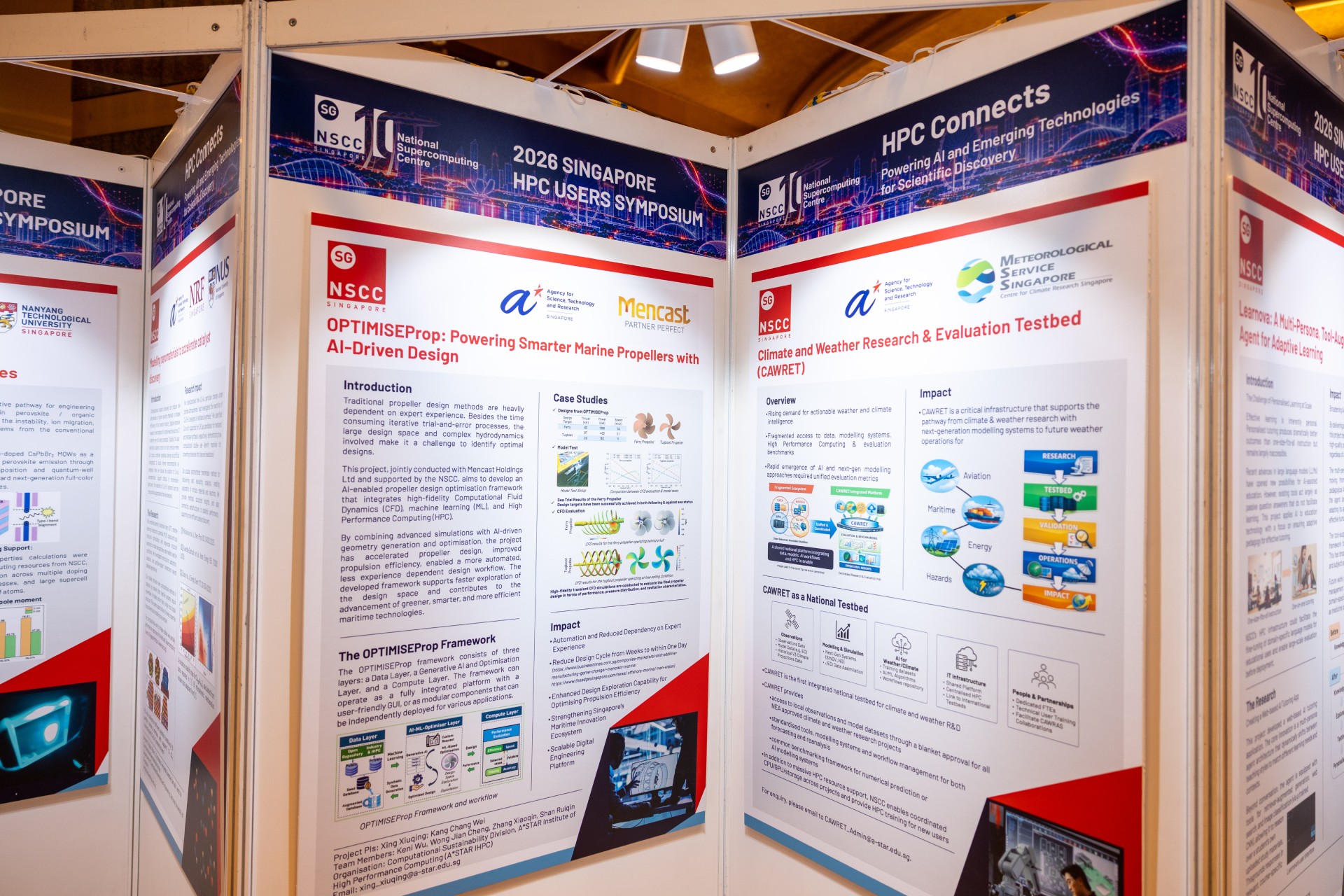
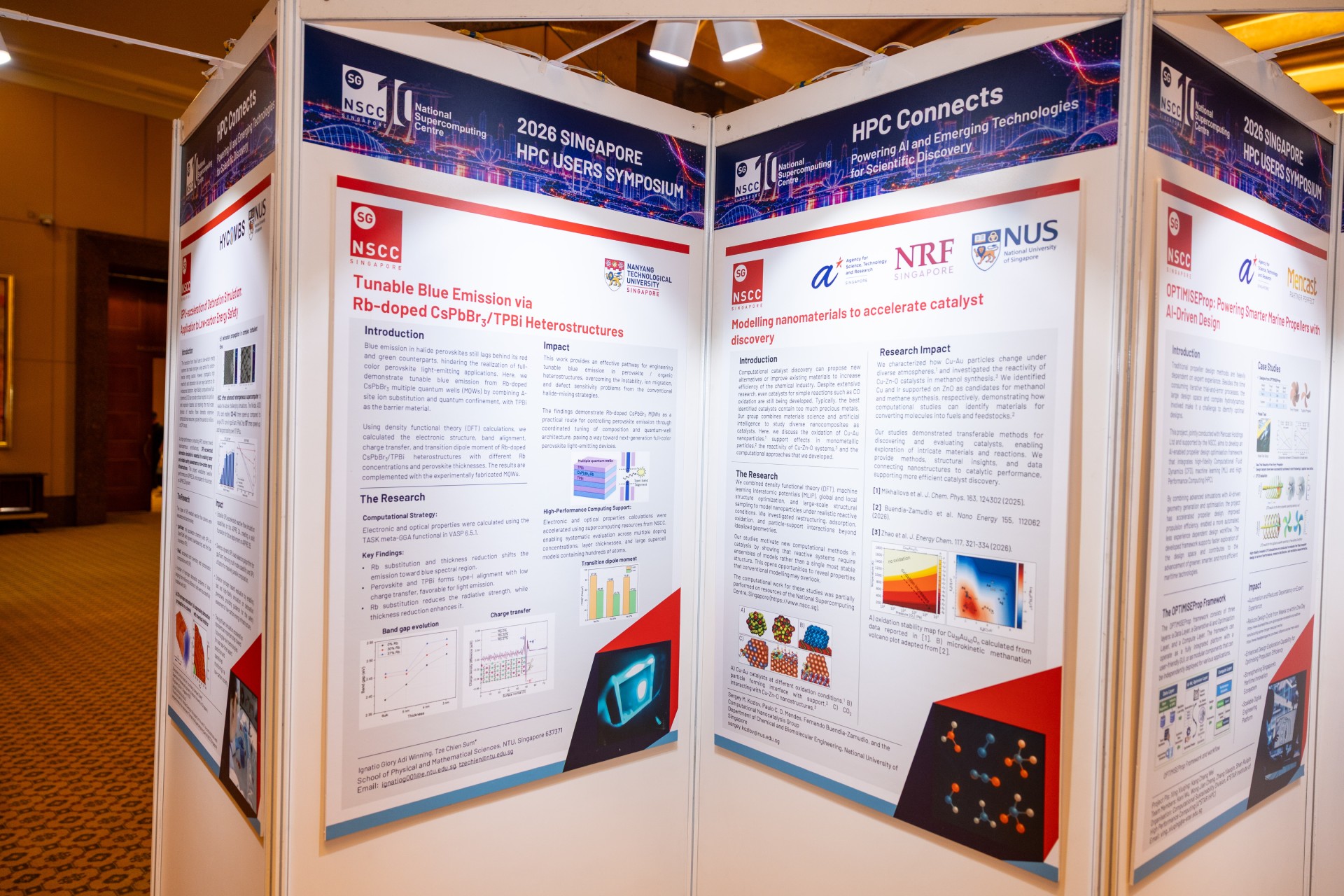
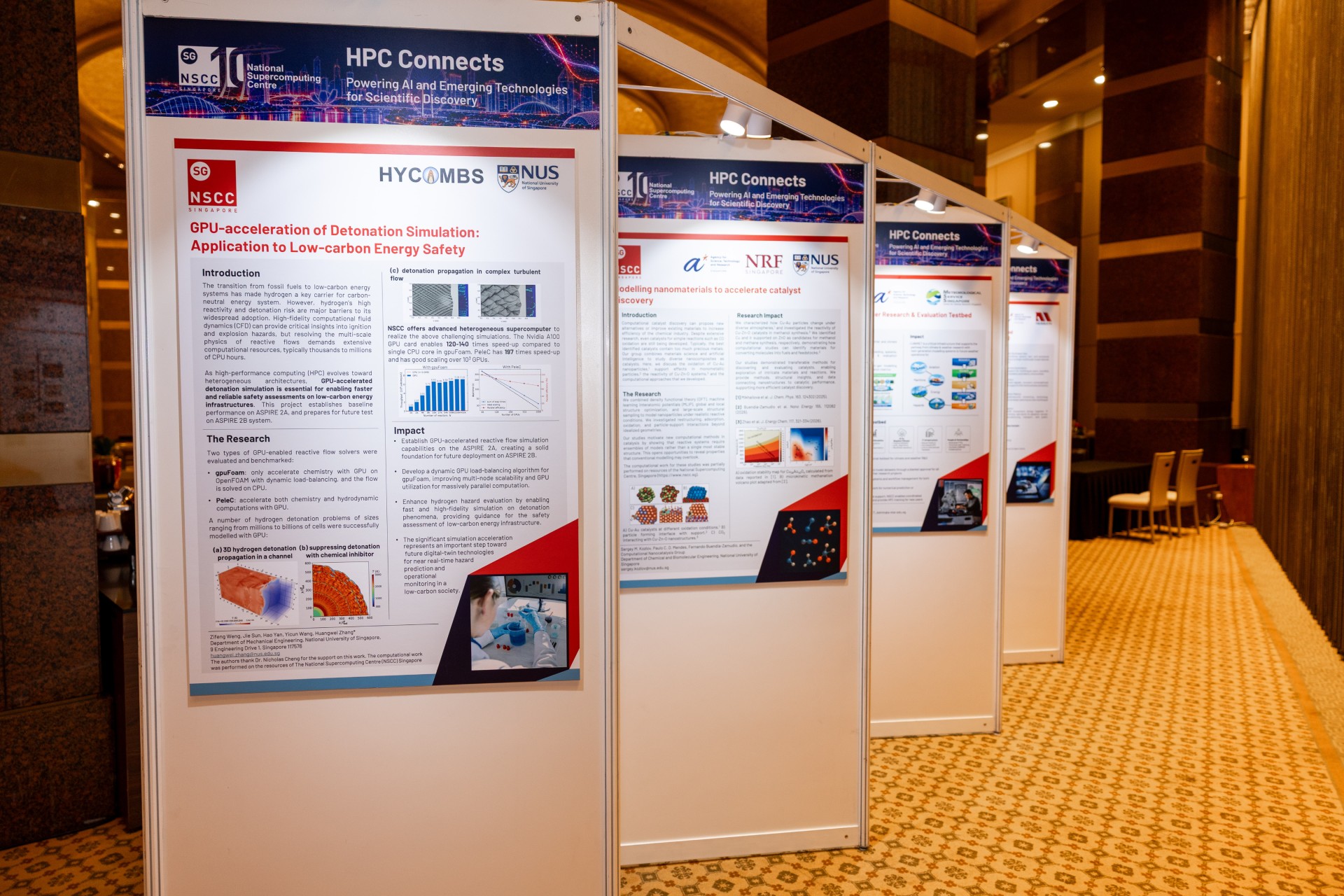
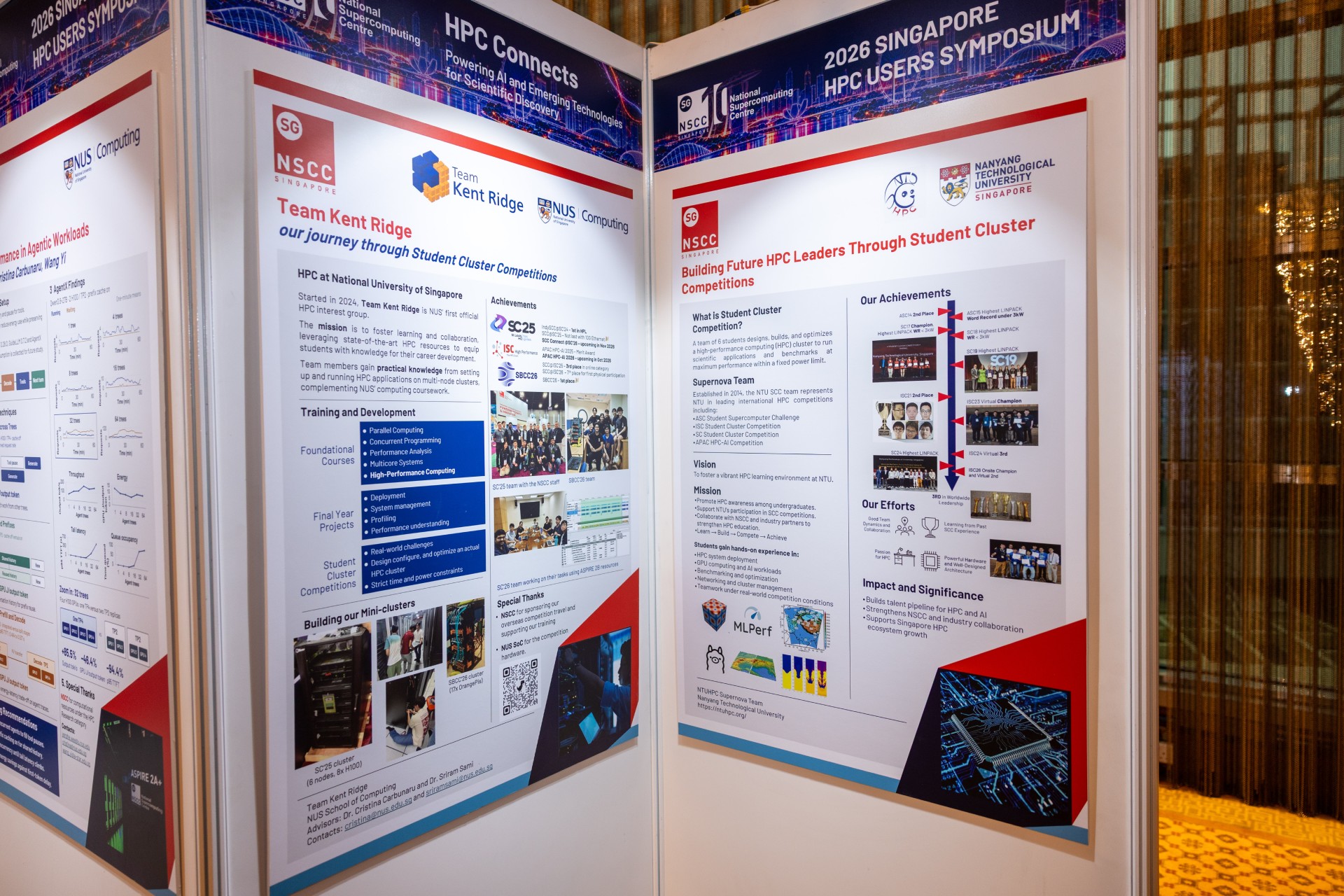
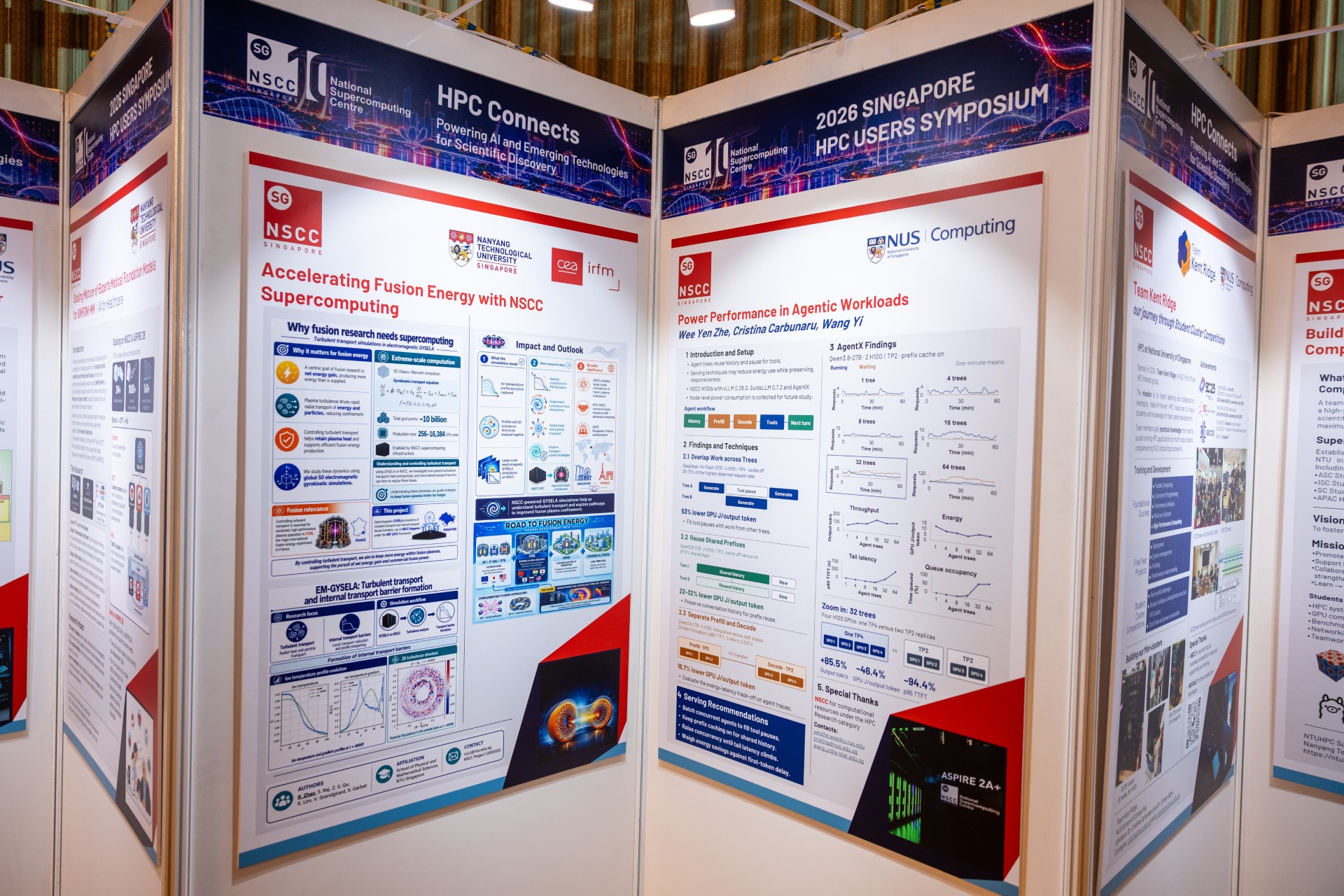
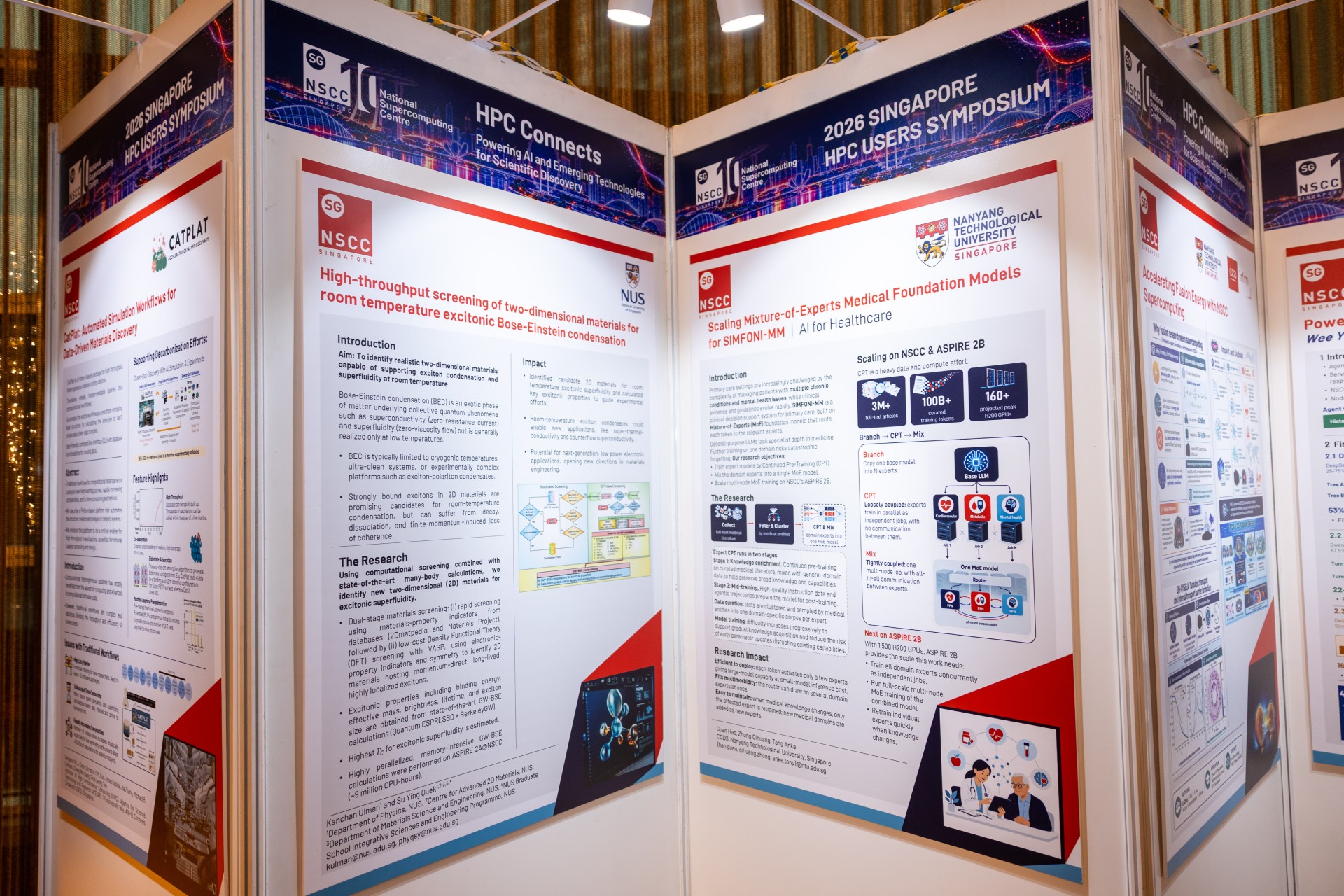
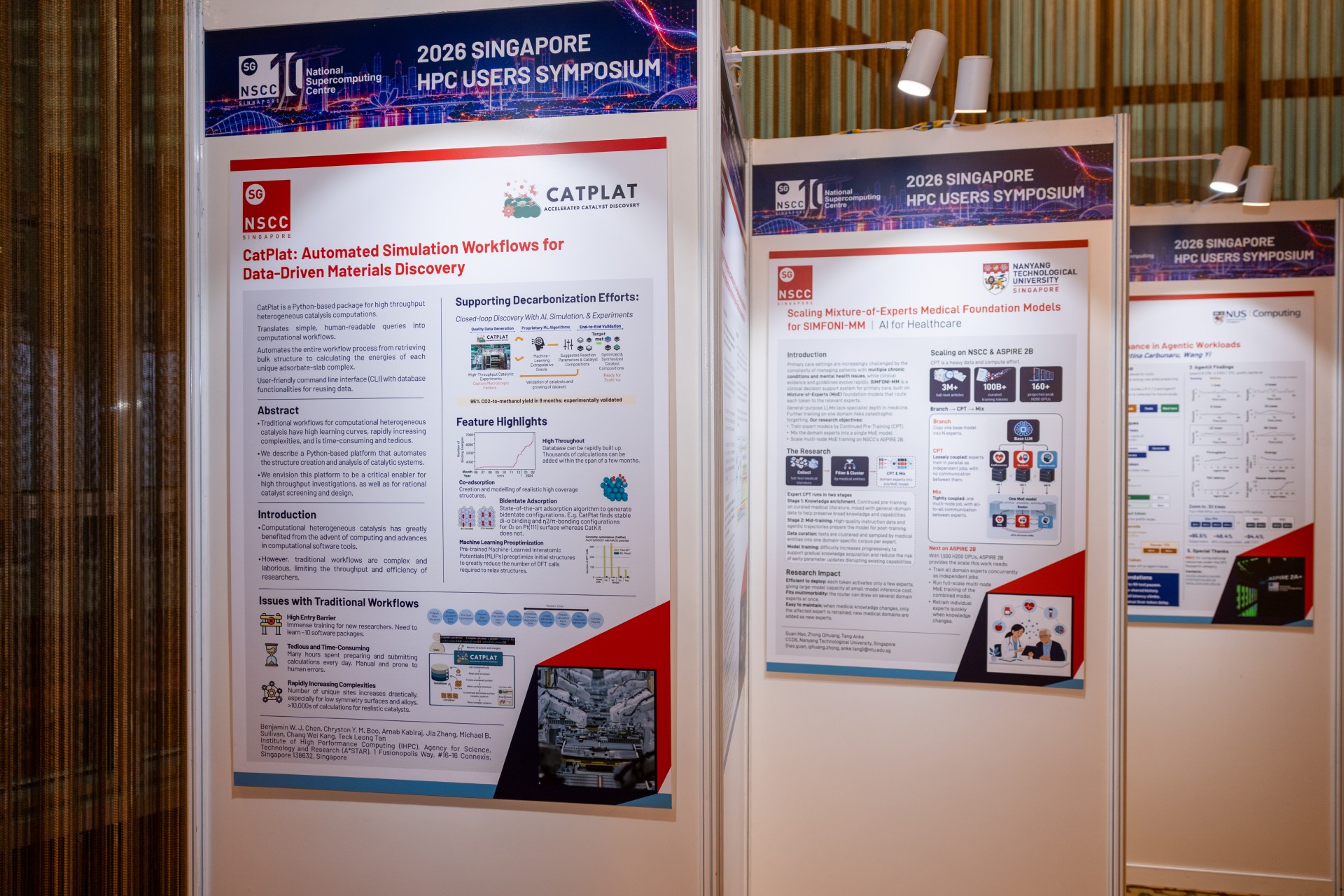
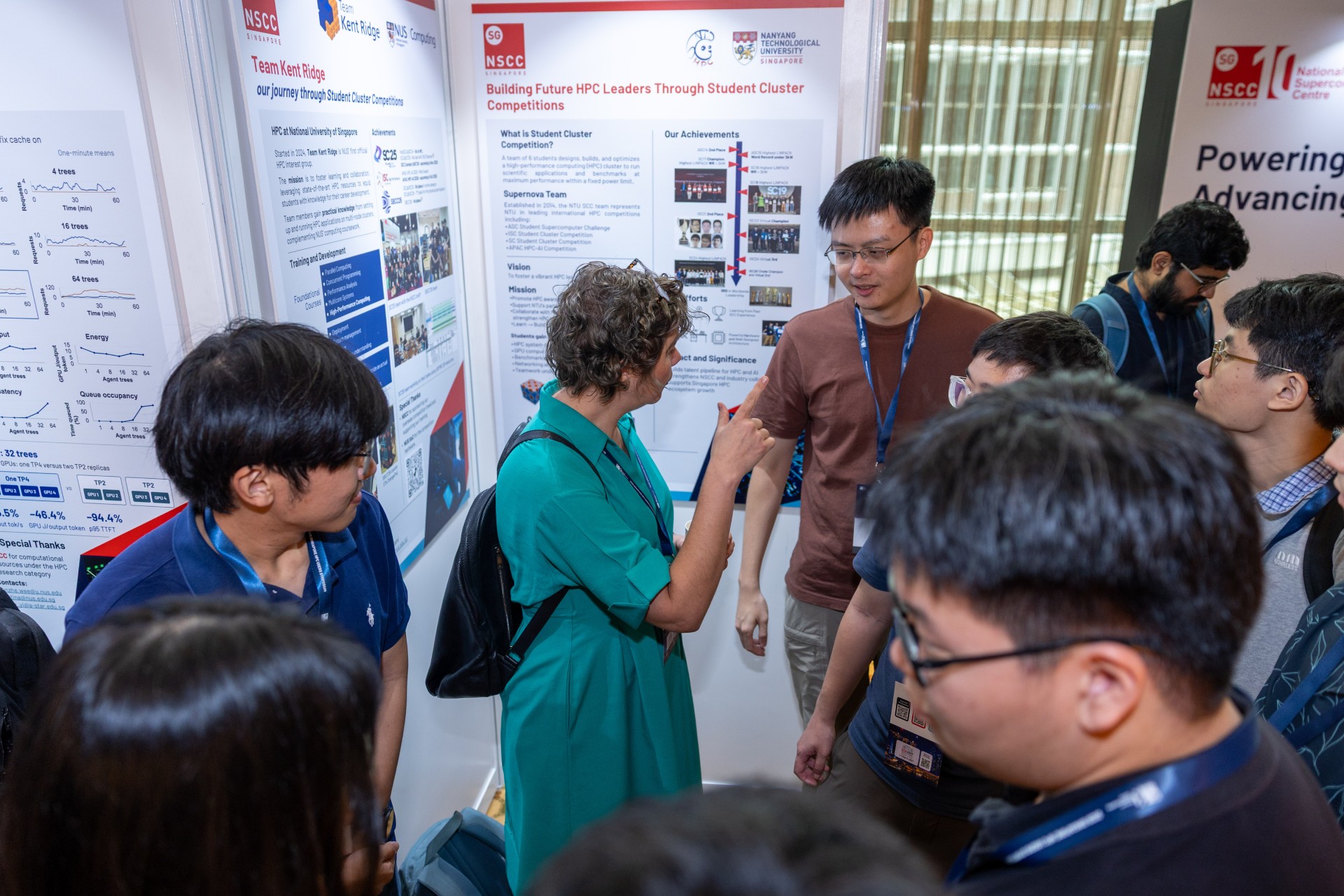
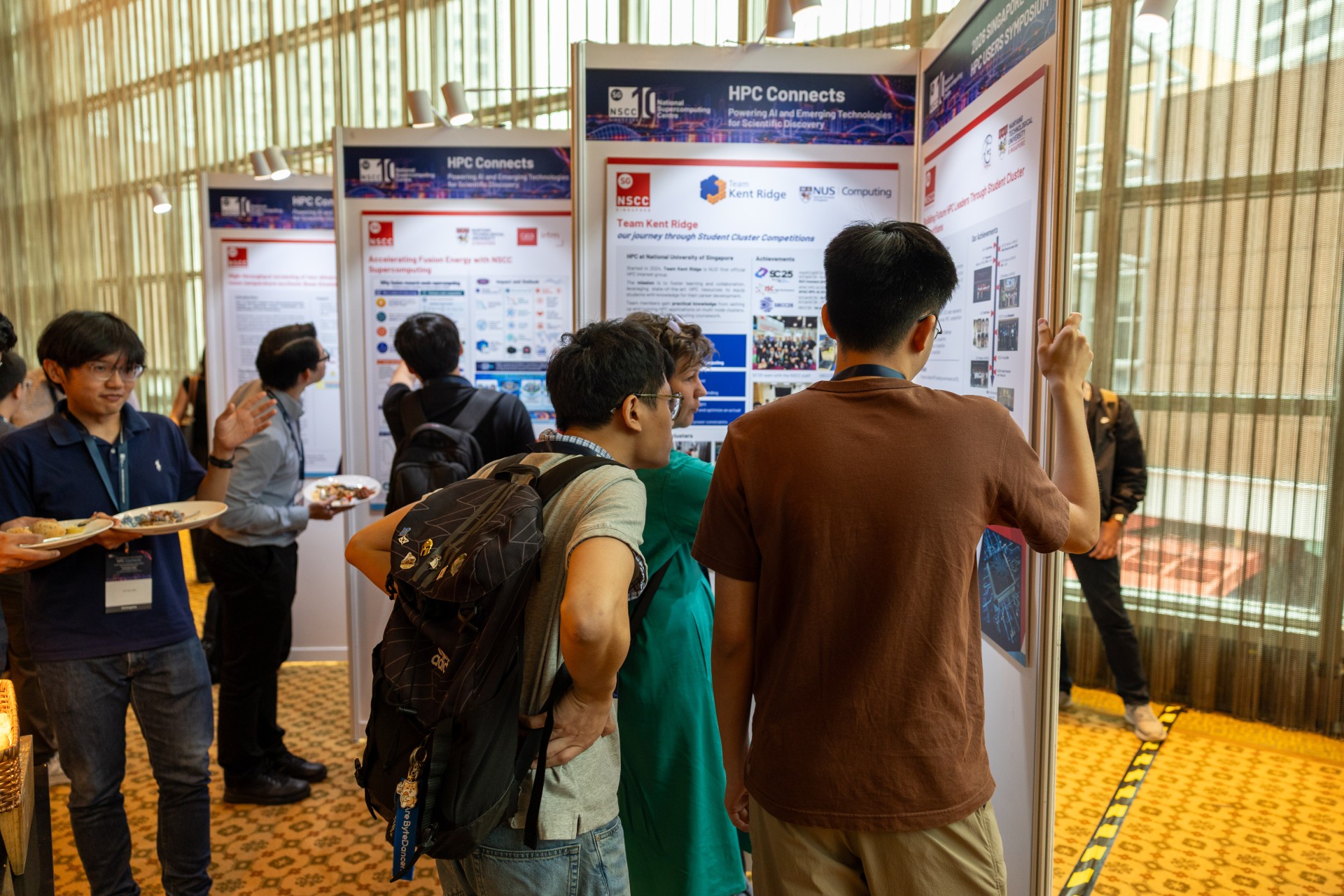
The research poster exhibition showcased projects supported by NSCC’s supercomputing resources, demonstrating how HPC is advancing scientific discovery and enabling real-world impact across research disciplines.
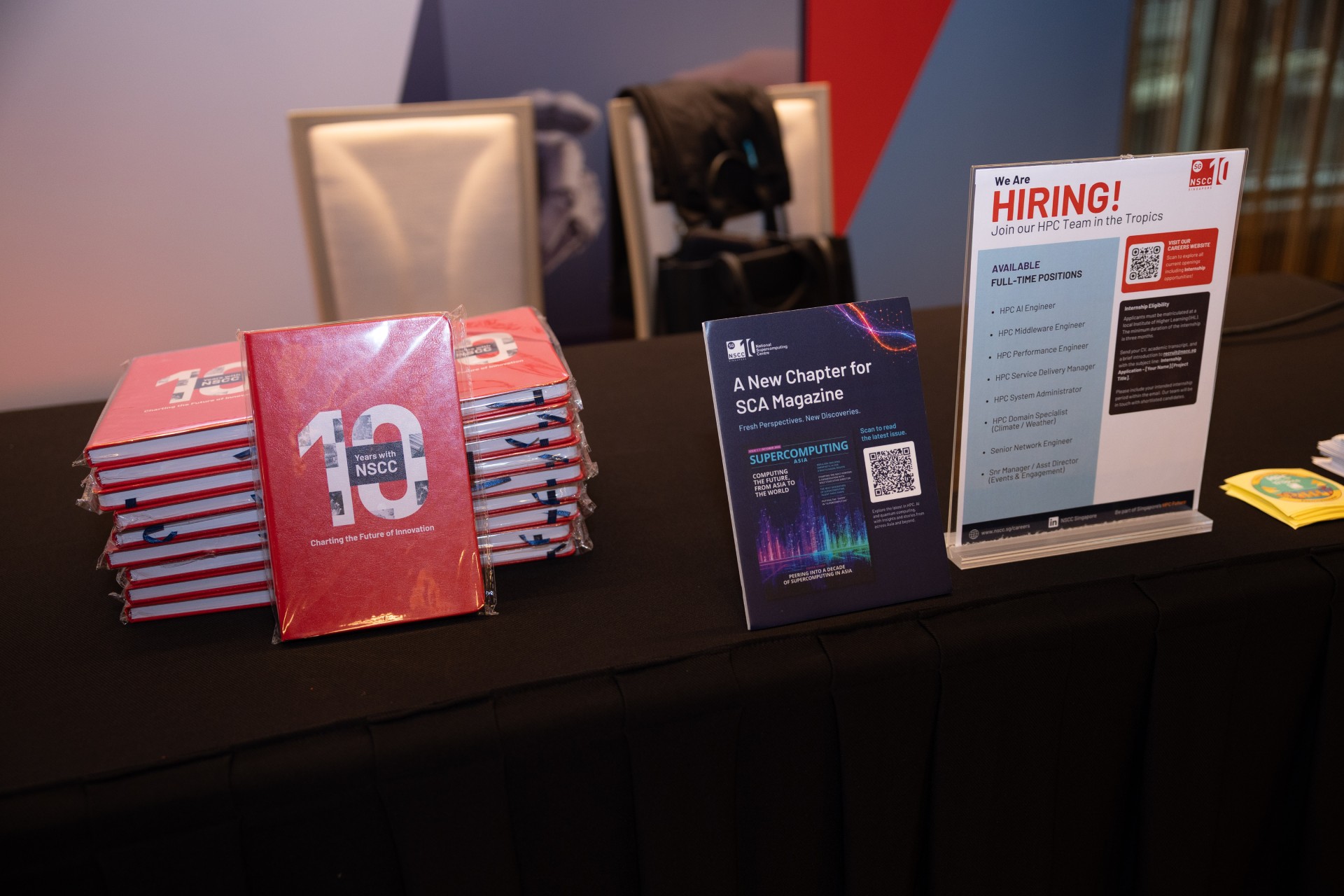
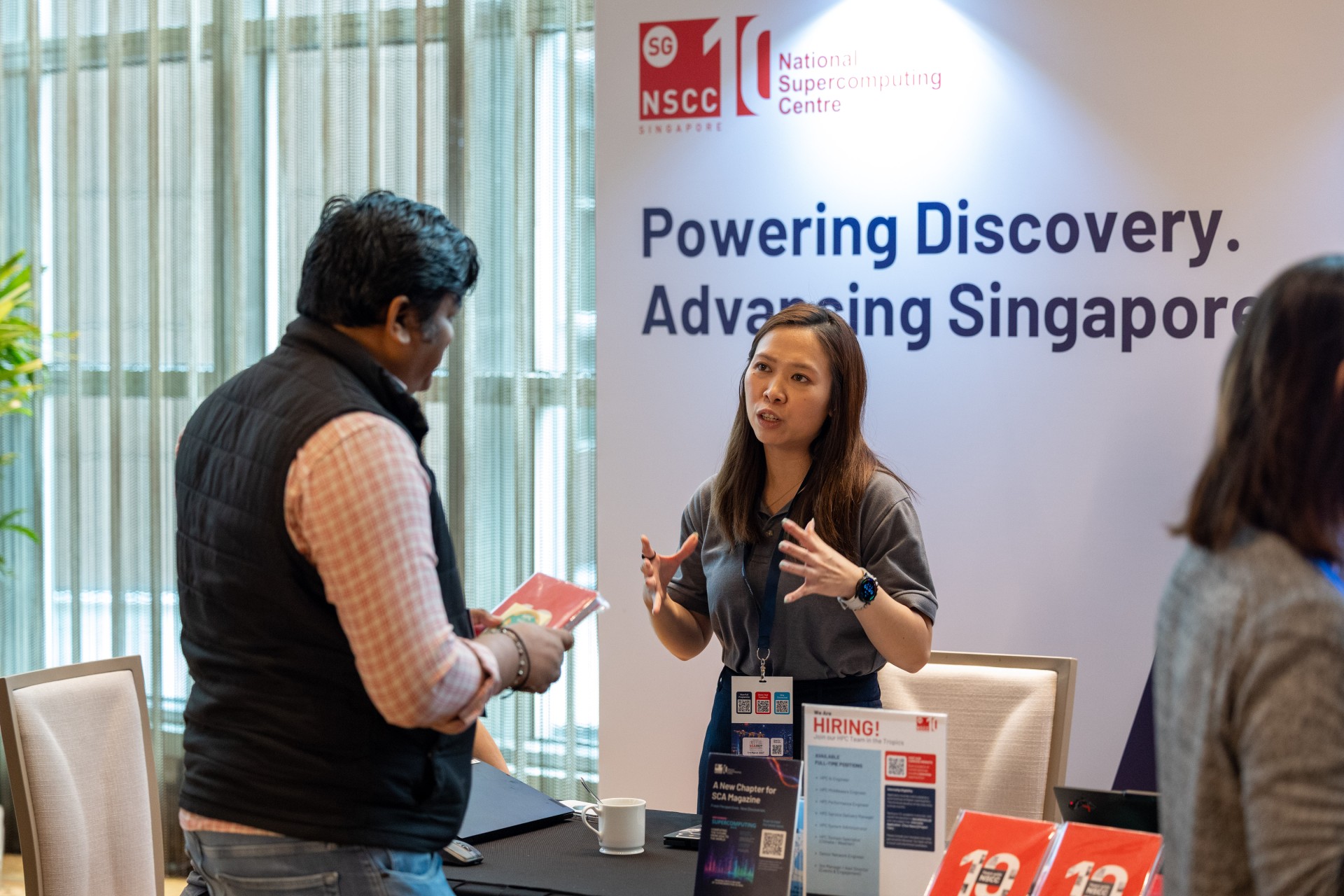
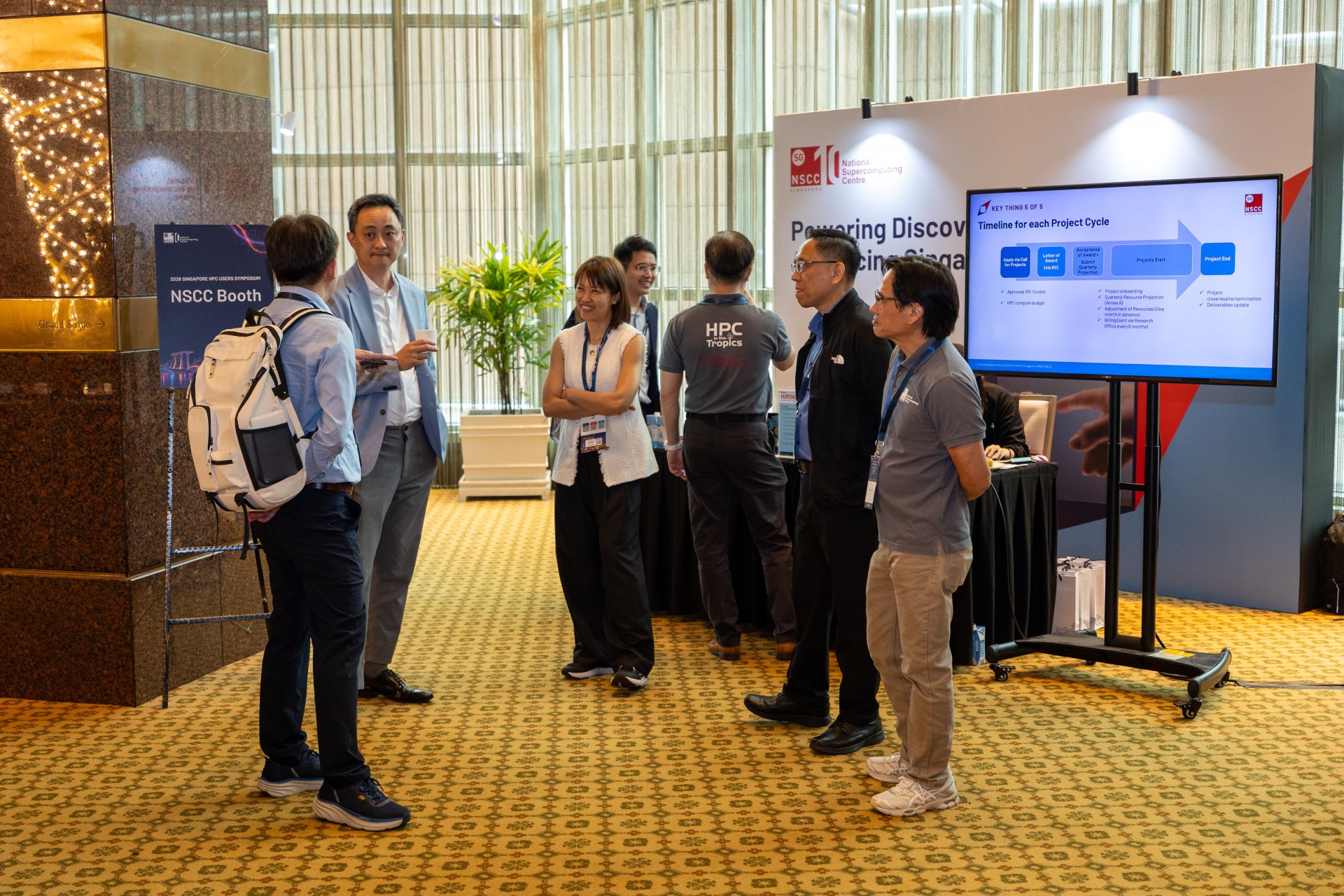
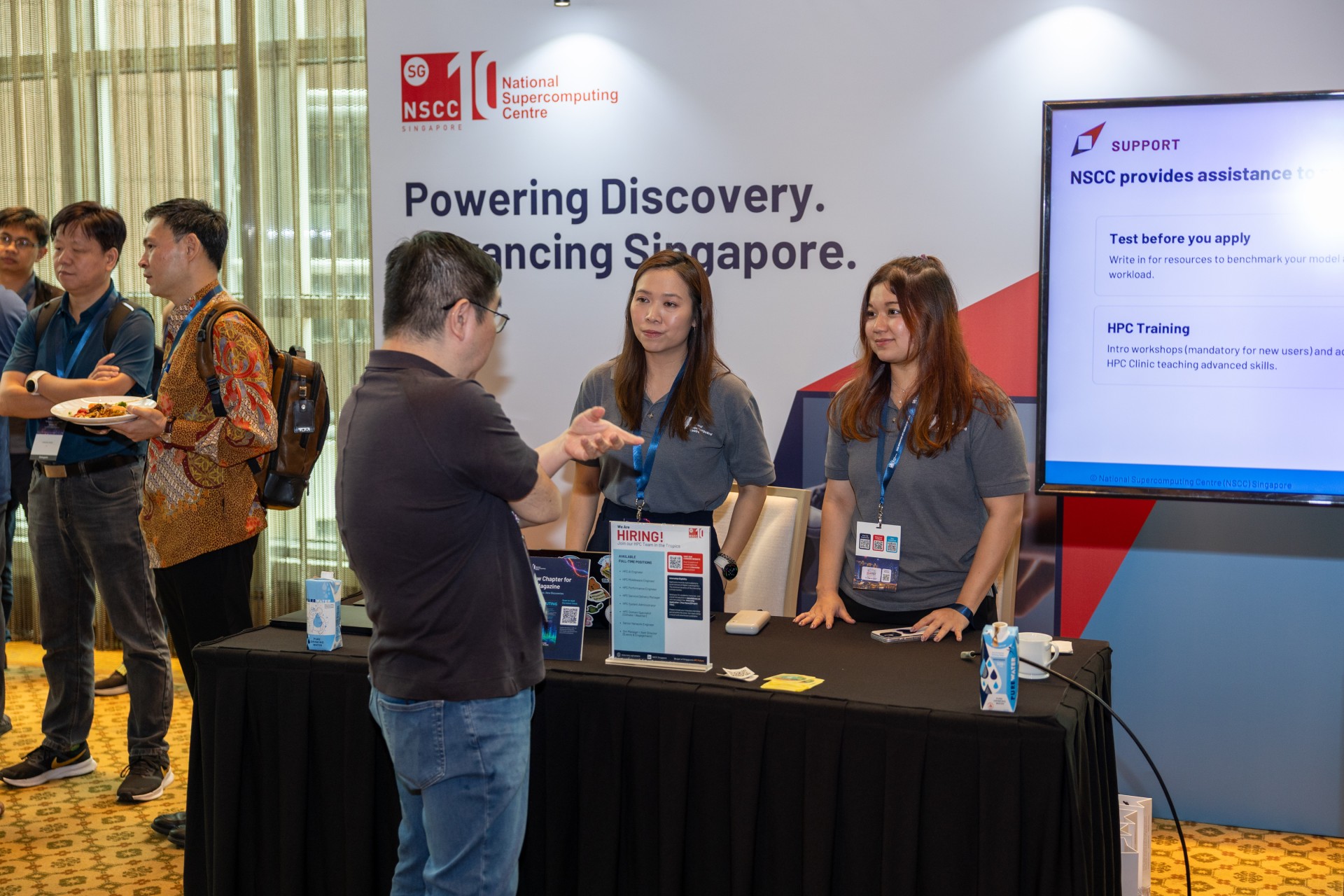
At the NSCC booth, participants learned more about national HPC resources, training opportunities and career pathways within Singapore’s growing advanced computing ecosystem.
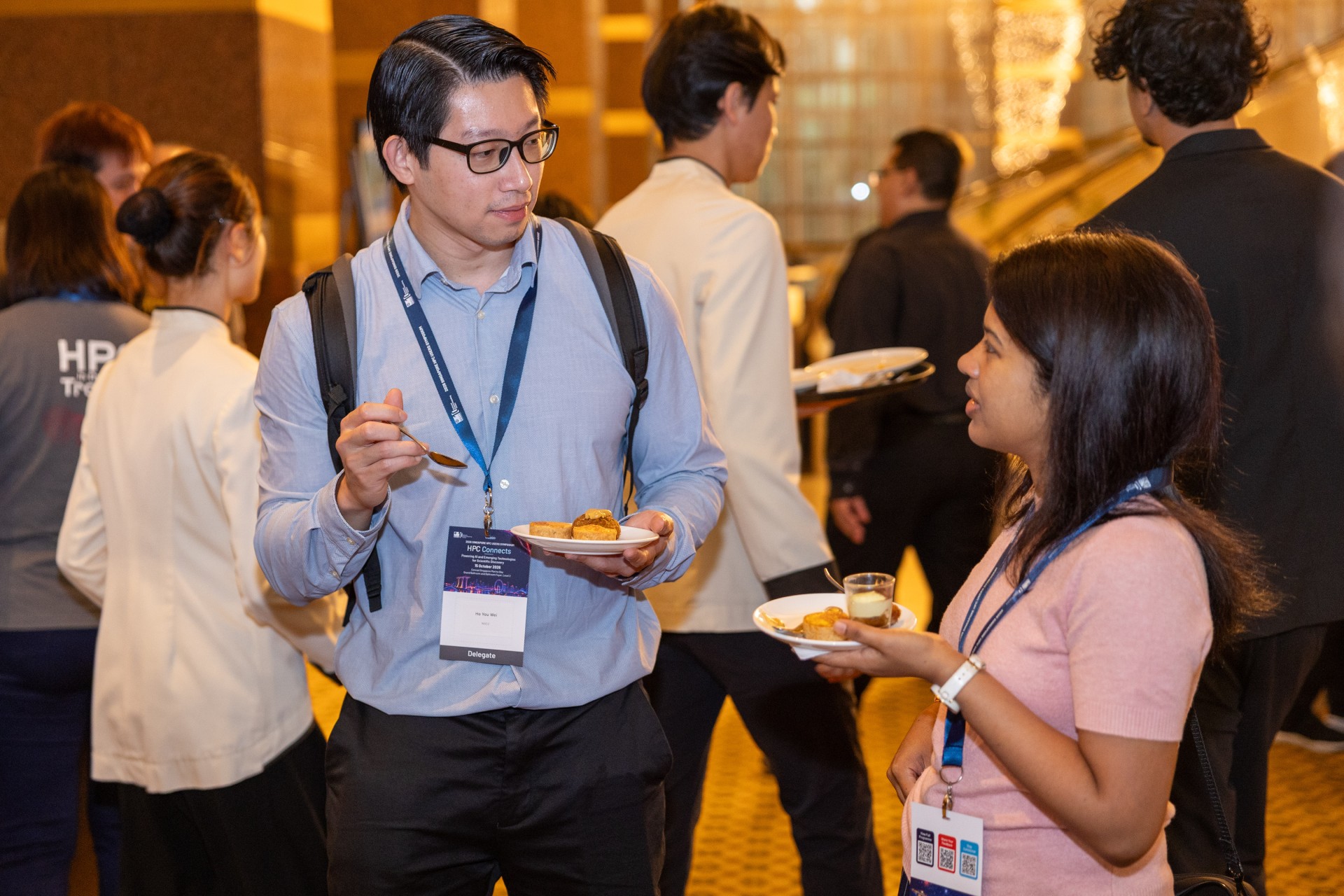
The symposium concluded with a networking dinner sponsored by AMD, giving attendees an opportunity to continue discussions, strengthen professional connections and explore potential collaborations beyond the day’s sessions.
Looking Ahead: Advancing Scientific Discovery Together
As NSCC’s annual flagship event for the local HPC community, the Singapore HPC Users Symposium continues to serve as a platform for connecting researchers, technology experts and industry partners, fostering knowledge exchange and advancing the use of high performance computing in research and innovation.
NSCC extends its appreciation to all keynote speakers, panellists, track chairs, presenters, hackathon participants, partners, sponsors and attendees for contributing to the success of the 2026 symposium.
We look forward to building on the ideas, connections and opportunities emerging from this year’s discussions as Singapore’s HPC community continues to advance scientific discovery through HPC, AI and emerging technologies.


Read about last year’s edition here: https://www.nscc.sg/portfolio/item/2025-hpc-users-symposium-small-nations-big-compute-where-innovation-meets-purpose/