


The National Supercomputing Centre (NSCC) Singapore has awarded the tender for the development of the next generation national supercomputer system plus upgrades to the national storage and research network infrastructure. The new system is expected to provide up to 10 Petaflops (10 PFLOPS) of computing capacity and is eight times more powerful than the current supercomputer. The new supercomputer is the first in a series of systems that will form the backbone of the nation’s future supercomputing resources which will support research in areas like climate change, biomedical science and smart nation activities. Find out more in the Media Release.
The HPC-AI Advisory Council (HPCAIAC) and National Supercomputing Centre (NSCC) Singapore today announced the immediate opening and acceptance of student team proposals for entry consideration in the jointly organized and hosted 2021 APAC HPC-AI Competition. Focused on showcasing the region’s top technical institutions and colleges, submissions for the 4th annual competition are being accepted through the end of April and open to teams across APAC comprised of currently enrolled undergraduate, upper level and advanced degree students skilled in state-of-the-art high performance computing (HPC) and artificial intelligence (AI).
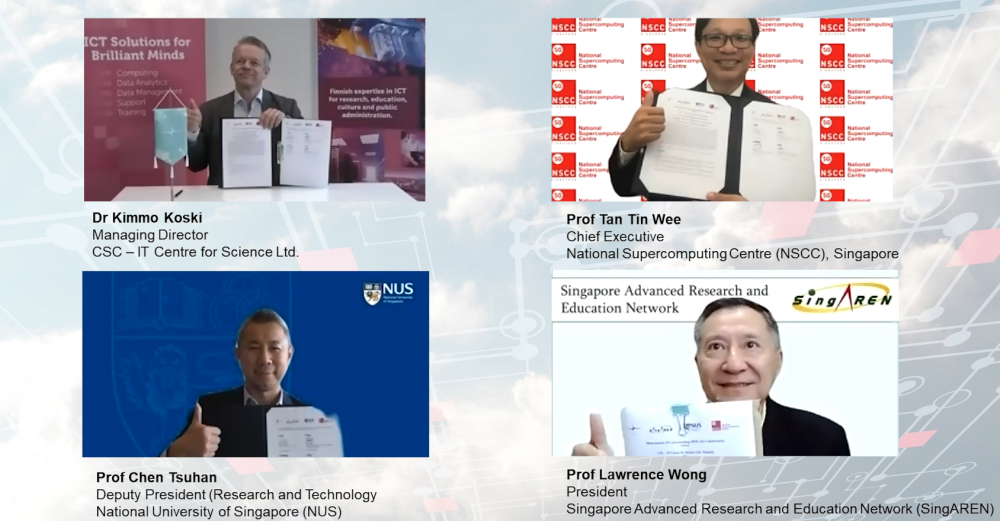
An MOU that was signed between Singapore entities and Finland’s CSC at the SCA21 conference is a reflection of the ongoing collaborative spirit in the HPC community. The MOU was announced by Dr Vivian Balakrishnan, Minister for Foreign Affairs and Minister-in-Charge of the Smart Nation Initiative at the Opening Ceremony of the SCA21 virtual conference, which adopted the theme “Supercomputing in the New Norm – Adapting to COVID-19 and beyond”. Find out more in the Media Release.


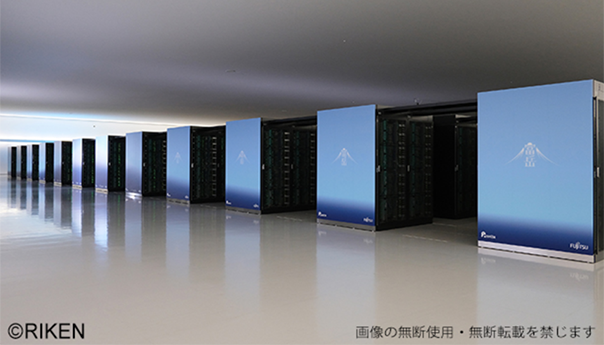
A new collaboration between Japan’s RIKEN Center for Computational Science (R-CCS), Research Organization for Information Science and Technology (RIST) and NSCC, will allow Singapore scientists to directly tap on the HPC resources of Japan’s Fugaku supercomputer to do ground breaking research, enhance educational activities and develop talent in high performance computing (HPC). Find out more in the Press Release.